Social protection as a right is the central message of this interview on the Doha Political Declaration.
Moreover, amid increasingly complex crises and accelerating climate and digital transformations, the Second World Summit for Social Development in Doha brought renewed attention to an approach that places people at the heart of decision-making. Through the Doha Political Declaration, countries renewed their commitment to ending deprivation, decent work and social integration as interconnected priorities. They require integrated policies, the engagement of society as a whole, and alignment with the 2030 Agenda for Sustainable Development.
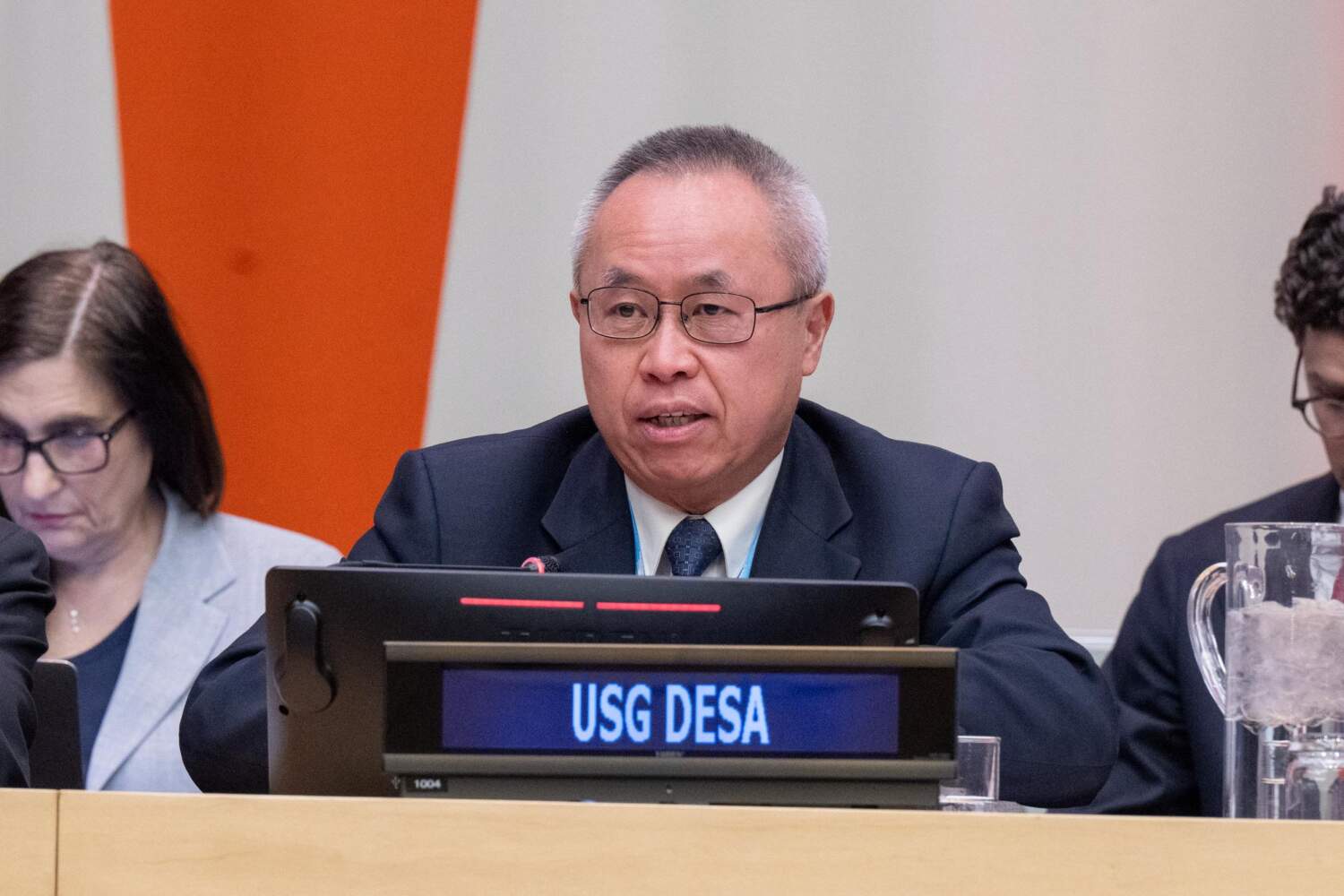
In this special interview with Ghiras Magazine, Mr. Li Junhua, United Nations Under-Secretary-General for Economic and Social Affairs, offers a practical perspective on translating these commitments into actionable policies. He discusses the role of social protection as a right and a foundation for resilience, the importance of accountability, transparency and public participation. The interview also covers the integration of social development with climate action and digital transformation in pursuit of a more just and inclusive future that leaves no one behind. He also addresses the financing and governance challenges facing developing countries, labour market transformations, and their implications for trust and social cohesion.
Social Protection as a Right at a Glance
- Social protection is now seen as a structural right and a foundation for just, inclusive, and resilient societies, rather than a temporary welfare measure.
- The main challenges in developing countries are financing and governance gaps, geopolitical tensions and conflict, social challenges, and labour market transformations that outpace policy adaptation.
- Universal social protection floors are key: countries with comprehensive systems performed better during crises, including COVID-19, and recovered faster.
- In addition, accountability depends on better data, meaningful participation of those most affected, and accessible public reporting with effective grievance mechanisms.
- Climate action, digital transformation, and social development cannot be addressed in silos.
Here is the full interview:
In your view, how can the key recommendations from the Second World Summit for Social Development be effectively translated into actionable policies at both global and regional levels?
The Second World Summit for Social Development was the largest and most successful gathering on social development in recent years. It brought together Member States, the UN system, civil society, academia, and other stakeholders to reaffirm a shared global commitment to address deprivation, decent work, and social inclusion. The challenge now is to ensure that these commitments are translated into actionable policies at both global and regional levels. It requires embedding people’s well-being into national development plans, budgets, and service delivery systems, ensuring improvements in income security, healthcare, and support services across the life course.
Borderless Challenges
Today’s context makes this urgent. But it also opens new possibilities. Many of the divisions between North-South or developed-developing countries have become less salient. We are increasingly facing shared, borderless challenges, such as climate change, conflicts, migration pressures, and deepening inequalities. At the same time, there is significant potential, particularly in harnessing technological change to improve people’s lives. The Summit, together with frameworks such as those emerging from the 2023 SDG Summit, the FFD4 (Sevilla Commitment), and the Doha Political Declaration, have already established what needs to be done. Turning commitments into tangible policies requires greater cooperation, stronger collaboration across government and society, and an acute focus on results that leave no one behind.
The UN system will support this process. Ultimately, the Summit’s recommendations can have a transformative impact through robust governance, participatory processes, and tangible delivery mechanisms that improve the lives of people everywhere. Achieving this requires unwavering political will.
Challenges for Social Protection as a Right in Developing Countries
What are the main challenges facing the implementation of these outcomes in developing countries?
First, financing and governance gaps. Furthermore, many countries lack the fiscal space needed to build comprehensive social protection systems and ensure universal access to quality health, education, and other services. Debt burdens have reached record highs and further constrain national policy.1 Structural problems with the global financial architecture, including limited concessional financing, further constrain social investment capacity. In many developing countries, these constraints disproportionately affect older persons who often rely on the informal economy, public services, and informal support networks for their well-being.
In short, the main references in this interview are summarized below:
| Topic | Detail |
|---|---|
| Event | Second World Summit for Social Development, Doha |
| Outcome document | Doha Political Declaration |
| Reference framework | 2030 Agenda for Sustainable Development |
| Median debt burden of least developed countries in 2010 | 3 per cent of revenue |
| Median debt burden of least developed countries in 2023 | 12 per cent of revenue |
| Report on social insecurity and inequality | DESA’s World Social Report 2025 |
Social Investment Gaps Facing Social Protection as a Right
Second, geopolitical tensions and conflict. While conflicts are not a new challenge, their humanitarian impacts are severe. Geopolitical rivalries are weakening multilateral cooperation, limiting international support for implementation. They also divert resources towards military spending. This reduces fiscal space for social investment when it is most needed.
Third, social challenges hinder progress. DESA’s World Social Report 2025 shows how growing insecurity, uncertainty in the future and high inequality are driving distrust and deepening social and political divisions. If not addressed, this social crisis will erode solidarity and undermine multilateralism.
Fourth, labour market transformations outpace policy adaptation. High inequality and people’s growing sense of insecurity stem largely from labour market dynamics. Informal employment is extremely high, and precarious jobs are expanding, including new forms such as platform work. People in these jobs benefit little from social investments and labour market policies. They are largely on their own.
Although they are often overlooked among today’s “megatrends,” labour market shifts have profound effects on social outcomes. They must be considered alongside other global challenges, such as climate change, digital innovation and AI, when assessing countries’ capacity to invest in social progress and implement Summit outcomes.
Social Development and the SDGs
How do you see the interplay between social development and the Sustainable Development Goals (SDGs)? Has meaningful progress been achieved in aligning these agendas?
Implementation of the social development agenda and progress towards the Sustainable Development Goals are not separate tracks but elements of a common agenda. When adopting the 2030 Agenda, Member States committed to achieving sustainable development in its three dimensions (economic, social and environmental) in an integrated and indivisible manner. They explicitly grounded the Agenda in the outcomes of the first World Summit for Social Development and other conferences as the Agenda’s foundation2, recognizing that these commitments are interdependent3 , and thus require holistic, coordinated solutions.
Eradicating Deprivation
The goals of eradicating deprivation in all its forms and dimensions, promoting full employment and decent work, and fostering social inclusion, lie at the core of both the Copenhagen and Doha declarations and the 2030 Agenda.
The Copenhagen and Doha outcomes not only articulate what must be achieved; but also provide roadmap for progress. They provide actionable guidance at both the national and international levels on policies and enabling conditions needed to achieve them. Also, harnessing this guidance can help sustain momentum toward implementing the 2030 Agenda.
Transparency is critical for trust and impact. What mechanisms do you believe are essential to ensure accountability in the implementation of social development programs worldwide?
First, better data is essential to understand who is being left behind and how. Today, we have a very incomplete picture of disparities by income, gender, disability status, geography, and other factors, making it difficult to assess whether policies reduce deprivation and inequality or exacerbate them. This requires investment in monitoring capacity at all levels, combined with institutional mechanisms that ensure responsiveness. Strong accountability depends on Member States setting clear targets, collecting, using, and publishing age-disaggregated data, allocating resources, and enabling participatory monitoring mechanisms.
Genuine Partnerships
Second, meaningful participation of those most affected by specific programmes is crucial. The Copenhagen and Doha Declarations both emphasize people-centered development. In practice, this means partnership with civil society, grassroots organizations, and marginalized communities in programme implementation. Their voices must shape priorities, monitor implementation, and evaluate outcomes.
Third, accessible public reporting and effective grievance mechanisms are critical for accountability. These should enable people and communities to report problems and influence policy corrections without retaliation.
With all that said, procedural transparency matters little without real change. Trust is built through tangible results that improve lives for all.
What measures should be taken to strengthen the resilience of social systems in the face of future crises?
Recent crises show how quickly progress unravels when societies lack resilience. Building this resilience requires transforming policy and societies to deliver broad-based economic security for all before the next crisis hits. It means ensuring economic and social policies reach everyone and reflect the integrated vision of the 2030 Agenda for Sustainable Development.
Inclusive Responses Through Social Protection as a Right
We know what works to strengthen resilience. Universal social protection floors are key. Countries with comprehensive systems of unemployment insurance, health coverage, child benefits, and pensions have performed better during crises, including COVID-19, and recovered faster. Universal coverage is more effective than narrowly targeted programmes. It enables inclusive responses without the delays and exclusion risks associated with complex targeting, especially in emergencies. These universal systems can be complemented with adaptive mechanisms that scale up automatically, for example, after a climate disaster.
Strengthening health, education, childcare, and long-term care systems builds both crisis preparedness and long-term development. Digital platforms can build resilient public service capacity but must not exclude the millions without connectivity or identification. Resilience also requires empowering local institutions, community organizations, and civil society to identify risks, coordinate responses, and ensure no one is left behind.
Furthermore, delivering resilience and economic security requires political commitment and tangible investment. In Doha, countries reaffirmed the importance of dedicating adequate resources to social development and of reforming international financial institutions to support this national action.
Integrating Climate and Digital Goals with Social Protection as a Right
What are the implications of integrating social development with climate and digital transformation goals, as emphasized by the summit’s recommendations?
The Doha Political Declaration recognizes the importance of integrated approaches. Climate action, digital transformation, and social development cannot be addressed in silos. The Pact for the Future and its Global Digital Compact, adopted last year, provide a common framework for ensuring these transitions serve all humanity.
Climate action, for instance, requires decarbonization, but without social protection for displaced workers and vulnerable communities, inequality will rise. Technology can expand access to services, but only if we close digital divides, build digital literacy, and safeguard against algorithmic discrimination. Green jobs address unemployment and environmental goals simultaneously, but we need meaningful participation of affected people in designing pathways forward. Integrated policy approaches capture these synergies. Siloed approaches miss them.
Breaking Down Silos
Equity must guide these transitions. The Doha Political Declaration, Pact for the Future, and Global Digital Compact all emphasize people-centered approaches. Transitions designed without community input can harm the very people they aim to help. Indigenous Peoples, women, youth, and marginalized groups need decision-making power in shaping integrated strategies. Integration also requires breaking down ministerial silos and funding mechanisms. The Pact for the Future’s call for reformed multilateralism is essential, as these challenges transcend borders and require coordinated global action.
Also, integrating social development with climate and digital agendas must address exclusion risks faced by older persons, remove barriers to their participation, and leverage digital and climate-resilient solutions to improve access to services and support.
The Doha Political Declaration and the summit’s recommendations highlighted the indispensable role of civil society, youth, and academia. What practical implications and transformative impacts could this emphasis bring?
The Declaration’s strong emphasis on the indispensable role of civil society, youth, academia and other societal actors marks a deliberate shift towards a genuinely whole-of-society approach to social development. The Declaration also highlights people-centered approaches across the life course, emphasizing older persons as active participants and contributors to social development.
In practical terms, governments must create and sustain institutional spaces for meaningful contributions. These include social dialogue institutions, economic and social councils, national development councils, youth platforms, and other consultative mechanisms. These bodies are essential for feeding lived experience, technical expertise, and community perspectives into the formulation, implementation, and monitoring of national strategies.
Strengthening Trust
When rooted in good faith dialogue and respect for freedom of association, the transformative potential is considerable. By fully engaging civil society, trade unions, academia, local authorities, and faith-based organizations, policies become more responsive and evidence-based. This inclusivity strengthens trust in institutions; improves accountability through public scrutiny and fosters innovation. Most importantly, implementation becomes more effective, as policies shaped collectively benefit from public ownership.
Furthermore, the Doha Political Declaration is a reminder of the need for a governance culture where participation is a core tool of effective policymaking, ensuring social development commitments translate into tangible progress.
Are there any UN plans to enhance social protection during emergencies?
The UN vision of social protection is not an emergency add-on, but as a cross-cutting tool that strengthens societies, builds resilience, and enables effective crisis response while advancing long-term social and economic development.
We are actively emphasizing the role of social protection in both “normal” and crisis contexts.
Social Protection as a Right and Social Inclusion
The Doha Political Declaration reinforces this approach, placing social protection at the heart of the social development agenda, not as a safety net, but as a core enabler of ending deprivation, decent work, and social inclusion. Social protection is now seen as a structural right and a foundation for just, inclusive, and resilient societies, rather than a temporary welfare measure.
Also, for emergencies, this approach has practical implications. The Declaration emphasizes the need for universal coverage and social protection floors. It sets targets to gradually expand coverage, even during crises, and link social protection to formalization of employment, gender equality and care work, demographic transitions, and green and digital transformations. The UN and its specialized agencies, such as the ILO, will support Member States and stakeholders through technical advice and capacity-building.
The Declaration also stresses sustainable financing of social protection systems, a responsibility going largely beyond the UN’s ambit. Achieving this requires international solidarity and nationally led strategies to make social protection systems resilient to economic, climate, technological, and demographic shocks.
————————————————————————————————————
Notes
[1] For LDCs, the median debt burden rose from 3 per cent of revenue in 2010 to 12 per cent in 2023 (DESA’s 2024 FfD report). The debt burden continued to rise from 2023 to 2024 at higher rates than GDP in all regions (WB’s International Debt Report 2025, issued on 3 December).
[2] Para 11, Agenda 2030.
[3] Para 13, Agenda 2030.
Questions About Social Protection as a Right
Why is social protection as a right central to the Doha Political Declaration?
The Declaration places social protection at the heart of the social development agenda, as a core enabler of ending deprivation, decent work, and social inclusion. Social protection is now seen as a structural right and a foundation for just, inclusive, and resilient societies, rather than a temporary welfare measure.
How does social protection as a right build resilience?
Universal social protection floors are key. Countries with comprehensive systems of unemployment insurance, health coverage, child benefits, and pensions have performed better during crises, including COVID-19, and recovered faster.
What does social protection as a right mean in emergencies?
Specifically, the Declaration emphasizes the need for universal coverage and social protection floors. It also sets targets to gradually expand coverage, even during crises, and the UN and its specialized agencies, such as the ILO, will support Member States through technical advice and capacity-building.