An integrated displacement response is needed because conflict and climate shocks now overlap, says a senior policy advisor at the Internal Displacement Monitoring Centre (IDMC).
Moreover, in this section, we open a dialogue on the critical intersections between security crises and environmental shocks, examining how this complex equation forces us to redefine humanitarian response. This means moving beyond immediate relief toward more sustainable, development- and climate-oriented solutions.
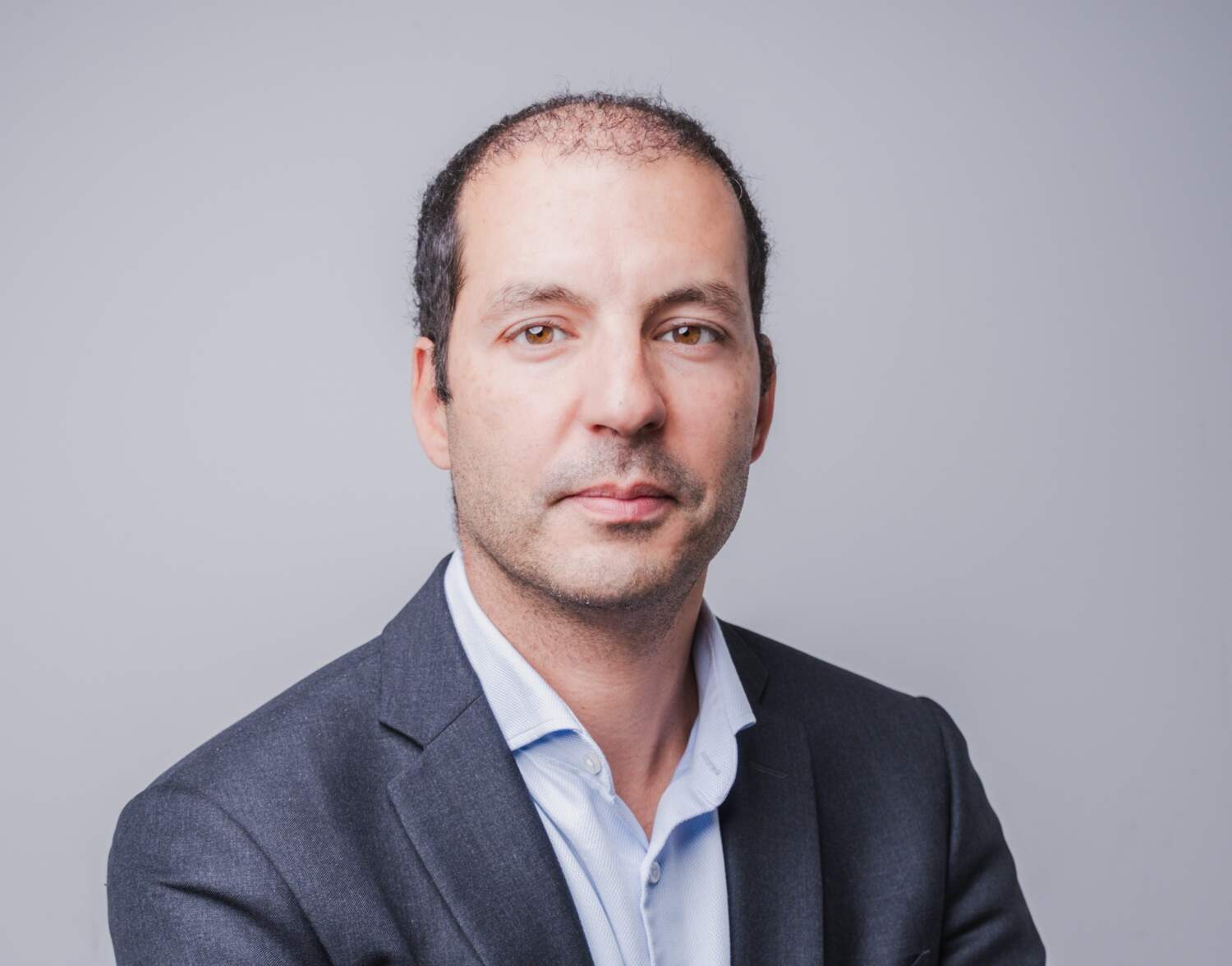
To explore this landscape and unpack its gaps, Ghiras hosts an exclusive interview for this issue’s main feature with Mr. Youssef Jai, Senior Policy Advisor at the Internal Displacement Monitoring Centre (IDMC) of the Norwegian Refugee Council (NRC). He shares his insights on funding gaps and the vital role of the humanitarian-development-climate nexus in breaking the endless cycle of displacement.
The Integrated Displacement Response at a Glance
- The number of countries reporting both conflict and disaster displacement has tripled since 2009.
- 45 out of 49 countries and territories monitored for conflict displacement in 2024 also experienced disaster displacement.
- Extremely fragile states receive roughly USD 2 per person per year in climate adaptation funding, compared to over USD 160 per person in more stable countries.
- In addition, humanitarian response still treats conflict and climate displacement as partly distinct tracks.
- Avoiding an endless cycle of displacement requires moving beyond short-term humanitarian assistance and supporting development approaches and government leadership.
Compound Vulnerabilities
- Armed conflicts and extreme climate events have become intertwined drivers of modern displacement. How has this overlap intensified human suffering for IDPs compared to the past?
Though IDMC reports separately on conflict and disaster displacement, they interact and compound vulnerabilities, making crises more complex, prolonging displacement and eroding IDPs’ resilience. The number of countries reporting both conflict and disaster displacement has tripled since 2009 according to the 2025 Global Report on Internal Displacement. 45 out of 49 countries and territories where conflict displacement was monitored in 2024 also experienced disaster displacement, e.g. DRC, Nigeria, Mozambique, Myanmar and Yemen.
Analysis of data from IDMC and Notre Dame Global Adaptation Initiative (ND-GAIN) reveals that more than ¾ of people internally displaced by conflict and violence at the end of 2024 were living in countries highly or very highly vulnerable to climate change.
Overlap of climate risks and conflict situations also leads to repeated displacement. Populations already displaced by conflict are more vulnerable to climate risks and can see their displacement prolonged because of disasters. For instance, in Mozambique and Myanmar respectively, cyclones Chido and Yagi hit populations already uprooted by conflict and violence, prolonging their displacement and delaying their recovery.
Also, as disasters will likely continue to intensify with the effects of climate change, and trigger repeated displacement, and with conflicts multiplying and intensifying, it is critical to build resilience in fragile and conflict-affected countries.
Unequal Access
- The world is witnessing a rise in repeated displacement, where people are forced to flee their places of refuge multiple times. To what extent has climate change become a primary driver of this pattern rather than just a secondary factor?
Displacement is multi-causal and climate change is rarely the only or primary driver. It acts as a risk multiplier, intensifying existing vulnerabilities and fragilities.
Socio-economic and political factors shape who is exposed, who is protected, and who is displaced. Low income, inequality, weak governance and exclusion increase vulnerability to climate change impacts and their risk of being displaced.
Unequal access to early warning systems, infrastructure and evacuation support matters. Hurricane Katrina (2005) demonstrated this clearly over 20 years ago: low-income and Black residents of New Orleans, lacking resources to evacuate the city, suffered the most.
Climate change increases the frequency and intensity of extreme weather events, amplifying the risk of repeated or protracted displacement.
Local Integration
- Many IDPs settle in environments already under severe ecological and climate stress. How does this affect their ability to rebuild their lives, achieve stability, or eventually pursue a safe return home?
Where IDPs, whose resilience has been severely eroded in the first place, settle matters a lot. It shapes what recovery could look like and has the potential to exacerbate vulnerabilities, increasing the risk of protracted displacement. For example, livelihoods can become fragile and competition over resources can increase tensions with host communities, making durable solutions, including local integration, more difficult to achieve.
This is why it is essential to integrate climate adaptation in responding to internal displacement, invest in sound urban planning and infrastructure as internal displacement is increasingly urban. It is also essential to support host communities alongside displaced populations to foster social cohesion. This means approaching displacement as a development and climate issue, not just a humanitarian one.
In short, the main figures from this interview are summarized below:
| Indicator | Figure |
|---|---|
| Countries reporting both conflict and disaster displacement | Tripled since 2009 |
| Countries with monitored conflict displacement in 2024 that also had disaster displacement | 45 out of 49 |
| People displaced by conflict and violence at the end of 2024 living in countries highly or very highly vulnerable to climate change | More than ¾ |
| Climate adaptation funding in extremely fragile states | Roughly USD 2 per person per year |
| Climate adaptation funding in more stable countries | Over USD 160 per person |
Distinct Tracks in the Integrated Displacement Response
- Does the international humanitarian response still treat conflict- induced and climate-driven displacement as separate tracks, or does the reality on the ground require a more integrated and holistic approach?
Despite growing evidence that climate and conflict displacement frequently overlap, the humanitarian response continues to consider them as partly distinct tracks. This is because they fall under different legal frameworks, funding streams and cycles, and institutional mandates as recognised by the 2021 UN Secretary-General’s High-Level Panel on Internal Displacement.
The overlapping reality on the ground is forcing more integrated, holistic and thus sustainable whole-of-displacement approaches across humanitarian, development, peacebuilding and, increasingly, climate action.
Aid Shortfalls
- In this complex landscape, what are the most critical gaps in protection and aid when security crises and climate shocks hit simultaneously?
According to UNHCR’s No Escape report, aid shortfalls in conflict-affected and fragile countries undermine the ability to protect people’s livelihoods and resilience from climate shocks. Extremely fragile states receive roughly USD 2 per person per year in climate adaptation funding, compared to over USD 160 per person in more stable countries. This is because risk tolerance of development and climate finance remains very limited.
Respecting international human rights and humanitarian law as well as regional mechanisms would already go a long way in ensuring IDPs are able to overcome protection risks and recover.
Avoiding the Cycle of Displacement Through an Integrated Displacement Response
- As global climate risks escalate, what fundamental changes are needed in humanitarian policy to ensure IDPs don’t remain trapped in an endless cycle of displacement?
The humanitarian, development and peace nexus was precisely developed for complex contexts where conflict, climate change and development challenges collide. Avoiding an endless cycle of displacement requires more than scaling up current aid, which is unrealistic given the new funding reality. It requires moving beyond short-term humanitarian assistance, creating conducive environments for durable solutions from the start. It also requires supporting development approaches and government leadership wherever possible as highlighted by the 2024 Independent Review of the Humanitarian Response to Internal Displacement.
Questions About the Integrated Displacement Response
Why is an integrated displacement response needed?
Despite growing evidence that climate and conflict displacement frequently overlap, the humanitarian response continues to consider them as partly distinct tracks. The overlapping reality on the ground is forcing more integrated, holistic and sustainable approaches across humanitarian, development, peacebuilding and, increasingly, climate action.
What does an integrated displacement response mean for host communities?
It means approaching displacement as a development and climate issue, not just a humanitarian one. Moreover, it requires integrating climate adaptation, investing in sound urban planning and infrastructure, and supporting host communities alongside displaced populations to foster social cohesion.
What gaps does an integrated displacement response need to close?
Aid shortfalls in conflict-affected and fragile countries undermine the ability to protect people’s livelihoods and resilience from climate shocks. Specifically, extremely fragile states receive roughly USD 2 per person per year in climate adaptation funding, compared to over USD 160 per person in more stable countries.