In short, the Doha Political Declaration puts human dignity, equality and social justice at the heart of social development.
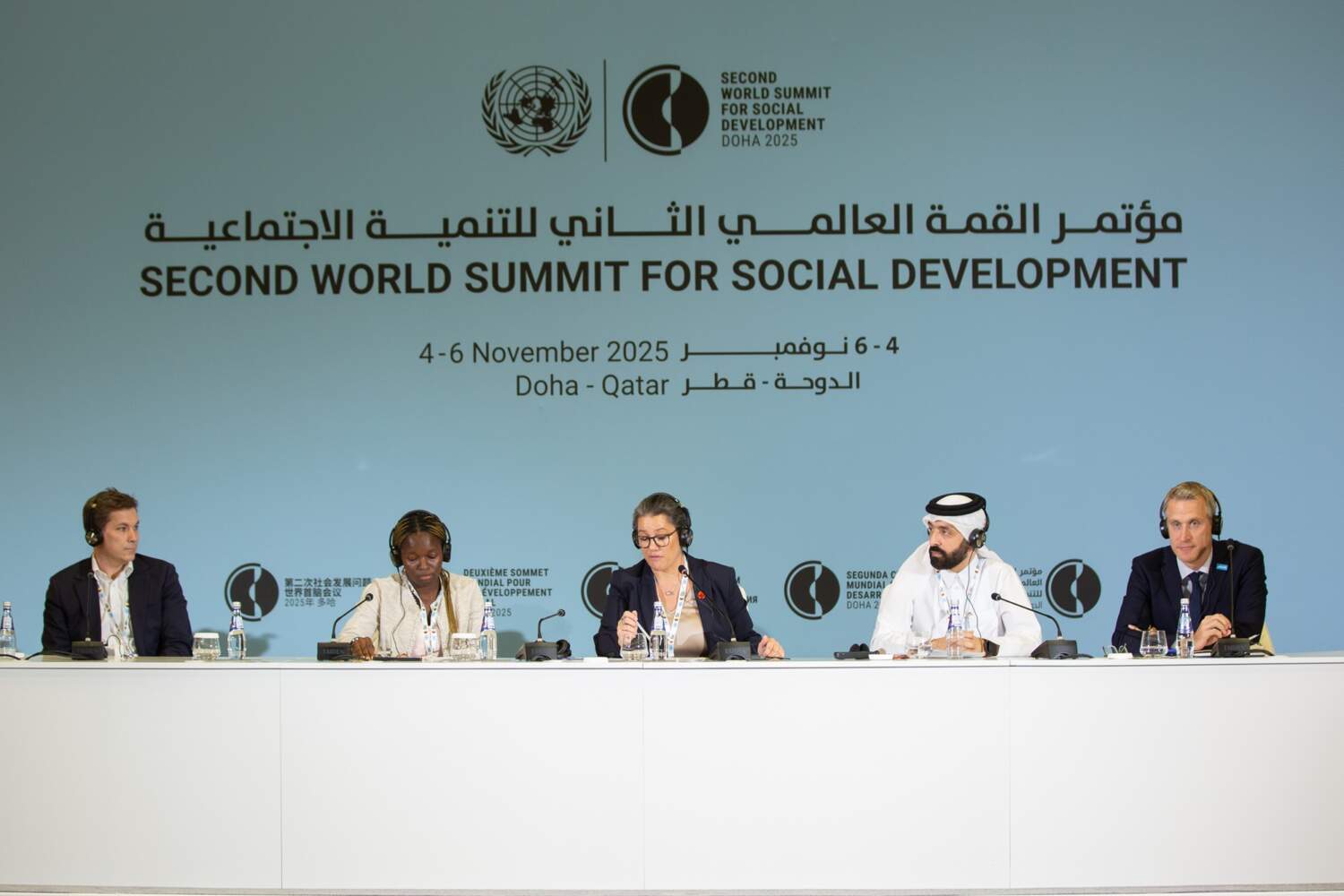
The Doha Political Declaration was adopted during the Second World Summit for Social Development, held in the Qatari capital from 4 to 6 November 2025. It also marked a turning point in international efforts to achieve more just, inclusive, equitable and sustainable social development.
Moreover, the Declaration was the outcome of extensive intergovernmental consultations and negotiations conducted at the United Nations in New York. It renewed the international community’s commitment to the Copenhagen Declaration and Programme of Action 1995, while addressing contemporary challenges and supporting the implementation of the 2030 Agenda for Sustainable Development.
Doha Political Declaration in Short
- Overall, the Declaration has 44 main paragraphs and reaffirms the commitment to the Copenhagen Declaration and the 2030 Agenda.
- Specifically, it rests on three pillars: eradicating deprivation, promoting decent work, and advancing social integration.
- It links social protection with climate action and disaster risk reduction.
- It establishes a follow-up mechanism with a five-year review process beginning in 2031.
- Finally, the Summit brought together nearly 14,000 participants, including more than 40 Heads of State and Government.
Doha Political Declaration: Three Mutually Reinforcing Pillars
Overall, comprising 44 main paragraphs, the Doha Political Declaration reaffirms world leaders’ commitment to the Copenhagen Declaration and Programme of Action and to the 2030 Agenda for Sustainable Development. Specifically, at its heart are three interrelated and mutually reinforcing pillars:
- Eradicating deprivation in all its forms and dimensions.
- Promoting full and productive employment and decent work for all.
- Advancing social integration.
In addition, together, these pillars place human dignity, equality and social justice at the heart of development.
Key Commitments of the Doha Political Declaration
1. Eradicating Multidimensional Deprivation in the Doha Political Declaration
The Declaration also calls for comprehensive strategies to combat deprivation, hunger and malnutrition, with a particular focus on social protection and sustainable financing.
2. Decent Work and Economic Transformation in the Doha Political Declaration
It also stresses the need to create productive employment, support the transition from the informal to the formal economy and ensure living wages. It also calls for investment in skills development to help workers adapt to the impact of artificial intelligence.
3. Advancing Social Integration in the Doha Political Declaration
The Declaration also emphasizes the importance of building cohesive societies by combating discrimination, empowering marginalized groups and strengthening intergenerational solidarity.
4. Supporting Those Most in Need
Particular attention is also given to women, older persons, persons with disabilities and young people. The Declaration calls for economic empowerment policies and an enabling environment for entrepreneurship, small enterprises and cooperatives.
5. Digital Transformation and Artificial Intelligence in the Doha Political Declaration
It calls for closing digital divides and ensuring equitable access to technology while protecting human rights in the digital age.
6. Food Security and Health
The Declaration also stresses the importance of building resilient food systems, ensuring universal access to healthcare and strengthening preparedness for pandemics.
7. Climate Action and Resilience
It also links social protection with climate action and disaster risk reduction, in line with the Paris Agreement and the Sendai Framework.
8. Gender Equality
The Declaration also calls for removing barriers to women’s participation, ensuring equal opportunities and equal pay, and adopting gender-responsive budgeting.
9. Financing Social Development in the Doha Political Declaration
It also calls for closing financing gaps, reforming the international financial architecture, strengthening international tax cooperation, and fulfilling official development assistance commitments.
Looking Ahead: Follow-Up to the Doha Political Declaration
The Declaration also establishes a follow-up mechanism that includes a five-year review process beginning in 2031 and reaffirms the Commission for Social Development as the principal follow-up body. It also calls for stronger coordination among regional commissions, United Nations entities and financial institutions, while recognizing civil society, young people, the private sector and academia as essential partners in implementation.
The Declaration concludes with a vision of a world free from deprivation, hunger and discrimination, founded on equity, solidarity and dignity. It affirms that social development is not merely a set of commitments, but a collective responsibility that requires words to be translated into action.
What Distinguished the Second World Summit for Social Development?
1. Hosted by an Arab Country (Qatar)
For the first time, an Arab country hosted a summit of this kind. Furthermore, qatar’s hosting reflected the growing international importance of the Global South and brought renewed attention to the concerns of the region.
In his opening address, HH Sheikh Tamim bin Hamad Al Thani, Amir of the State of Qatar, said:
“Social development can never be achieved without peace and stability. We believe that lasting peace, unlike temporary settlements, is just peace.”
Reuters and the Associated Press also noted that the Summit gave greater prominence to issues affecting the Muslim world, particularly amid the humanitarian crises in Palestine, Yemen and Syria.
2. Broad International Consensus Despite Global Tensions
The Declaration was adopted by consensus despite geopolitical divisions, reflecting a shared international desire to rebuild trust around social justice.
3. Linking Social Development with Climate and Digital Transformation
The Summit also went beyond deprivation and employment, connecting social development with digital transformation, artificial intelligence and climate resilience within an integrated framework.
4. A Clear Role for Civil Society and the Private Sector
The Declaration also recognizes the essential roles of civil society, young people, academia and the private sector, broadening the range of development actors compared with the first Summit.
5. Recognition of Giving and the Social and Solidarity Economy
The Summit highlighted models of giving and the social and solidarity economy, including those rooted in Arab and Islamic culture.
Moreover, the Declaration recognizes the important role that the social and solidarity economy can play in eradicating deprivation, promoting social inclusion and catalysing social transformation. This contributes to the achievement of the 2030 Agenda and its Sustainable Development Goals and helps to ensure that no one is left behind.
The Summit in Figures
The Summit was also the largest global gathering on social development in three decades. It brought together nearly 14,000 participants, including more than 40 Heads of State and Government and over 230 ministers and senior officials, alongside representatives of international organizations, youth, civil society, academia and the private sector. Its programme also featured more than 250 solution sessions.
Questions About the Doha Political Declaration
What is the Doha Political Declaration?
Specifically, it was adopted during the Second World Summit for Social Development, held in the Qatari capital from 4 to 6 November 2025. It also marked a turning point in international efforts to achieve more just, inclusive, equitable and sustainable social development.
What are the three pillars of the Doha Political Declaration?
Specifically, at its heart are three interrelated and mutually reinforcing pillars. They are eradicating deprivation in all its forms and dimensions, promoting full and productive employment and decent work for all, and advancing social integration.
How will the Doha Political Declaration be followed up?
It establishes a follow-up mechanism that includes a five-year review process beginning in 2031. It also reaffirms the Commission for Social Development as the principal follow-up body.