In essence, the wheat project in northern Syria covers a full value chain, from the seed to a loaf of bread.
The Wheat Project in Northern Syria at a Glance
- Since 2019, the project has been a development initiative, not a short-term emergency response.
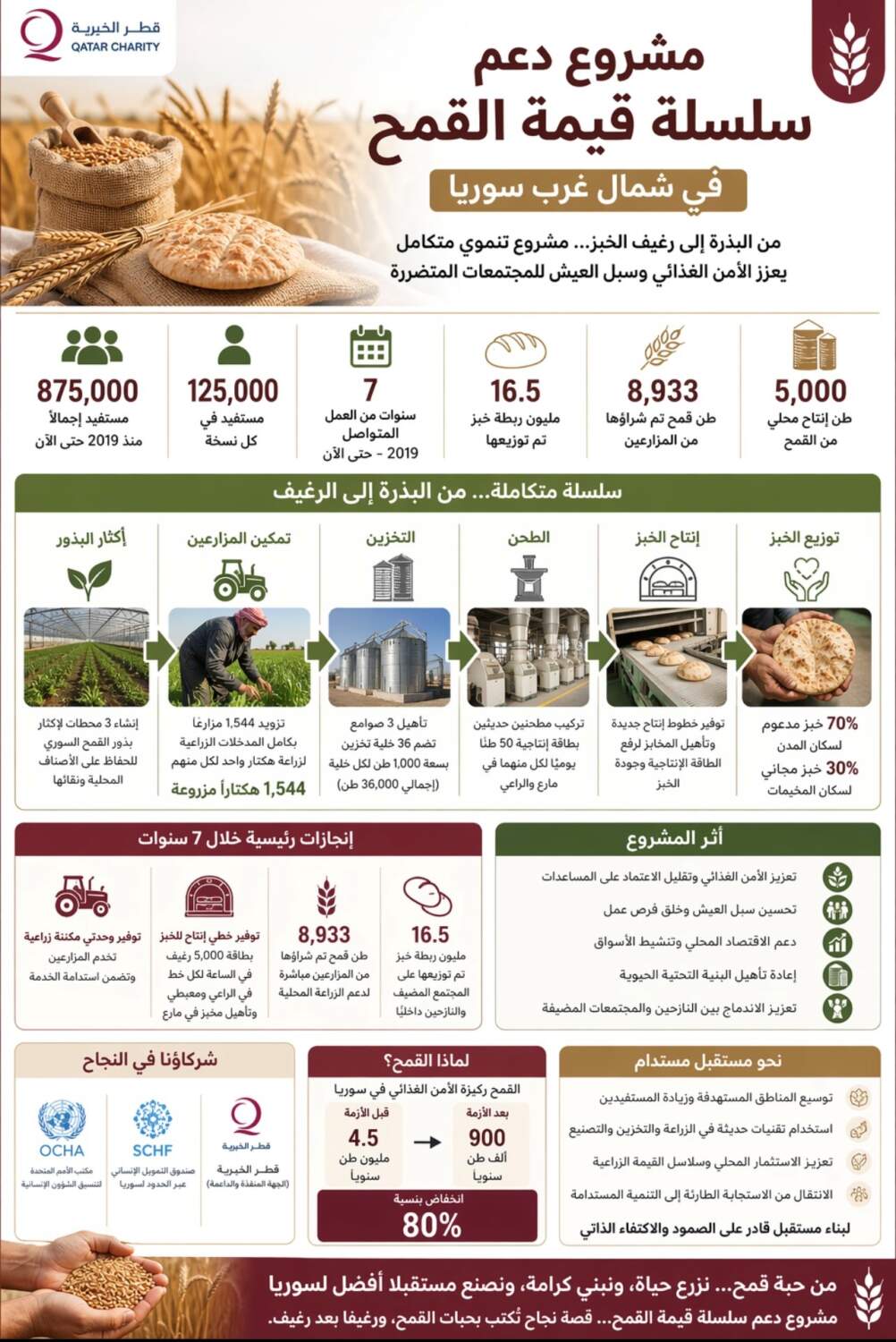
- Overall, it has reached approximately 875,000 beneficiaries over seven consecutive years, around 125,000 people per cycle.
- Farmers cultivated more than 1,544 hectares and produced nearly 5,000 tons of wheat.
- Meanwhile, national production has dropped from about 4.5 million tons a year before the crisis to roughly 900,000 tons.
- Moreover, the seventh phase in 2026 targets new areas, modern agricultural technologies and local investment.
Qatar Charity’s “Support Wheat Value Chain in North West Syria” project strengthens food security, boosts local production, and benefits nearly 875,000 people through an integrated development model.
In a land worn down by conflict, where resources have dwindled and needs have deepened, bread is no longer just a daily sustenance. It has become synonymous with dignity and stability. Against this backdrop, Qatar Charity launched its “Support Wheat Value Chain in North West Syria” project in 2019. It was not a short-term emergency response, but a far-reaching development initiative reconnecting land, people, and production.
Overall, over seven consecutive years, the project has reached approximately 875,000 beneficiaries, averaging around 125,000 people per cycle. It has grown into one of the most prominent models that successfully bridges humanitarian aid with sustainable development in a highly complex environment. These figures do not merely measure the scale of the effort. They reflect real transformations: farmers returning to their land and families regaining their daily livelihoods.
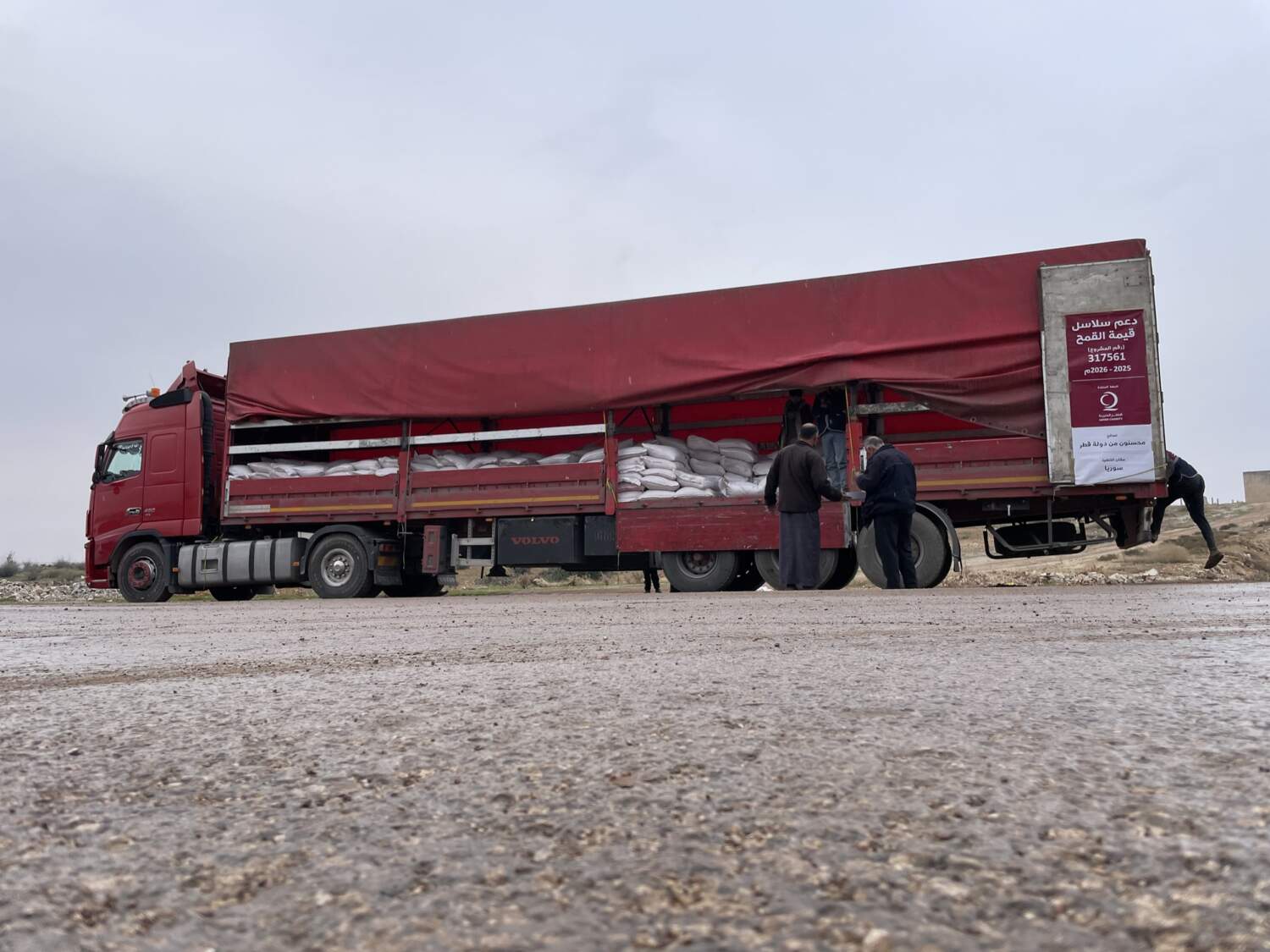
From Seed to Bread: The Wheat Project in Northern Syria
At its core, the project adopts a holistic vision of wheat. It is not merely an agricultural crop, but a fully integrated value chain that begins with the seed and ends with a loaf of bread.
Firstly, efforts began with revitalizing indigenous wheat varieties through the establishment of seed multiplication units, restoring an essential component of Syria’s agricultural identity. At the same time, farmers were empowered through the provision of comprehensive agricultural inputs. This enabled the cultivation of more than 1,544 hectares and the production of nearly 5,000 tons of wheat.
In addition, rather than leaving this output vulnerable to market uncertainties, the project actively supported farmers by purchasing thousands of tons directly from them. This approach not only encouraged continued production but also revitalized the local economic cycle. With the rehabilitation of grain silos, mills, and bakeries, the production cycle was complete. Harvested wheat was then transformed into bread distributed daily to beneficiaries, either free of charge or at subsidized rates through a fair and sustainable mechanism.
A Strategic Necessity
The significance of this intervention becomes even clearer when viewed against Syria’s broader wheat landscape. National production has dropped dramatically, from about 4.5 million tons annually before the crisis to roughly 900,000 tons, highlighting a severe food security gap.
In this context, the project is not merely a humanitarian choice. It is a strategic intervention aimed at restoring balance to one of the country’s most vital sectors.
What distinguishes this model is its shift beyond conventional relief. Instead of focusing solely on bread distribution, it rebuilds an entire productive ecosystem, reviving farmland, creating jobs, integrating displaced populations into economic life, and reactivating essential infrastructure that had long been nearly dormant.
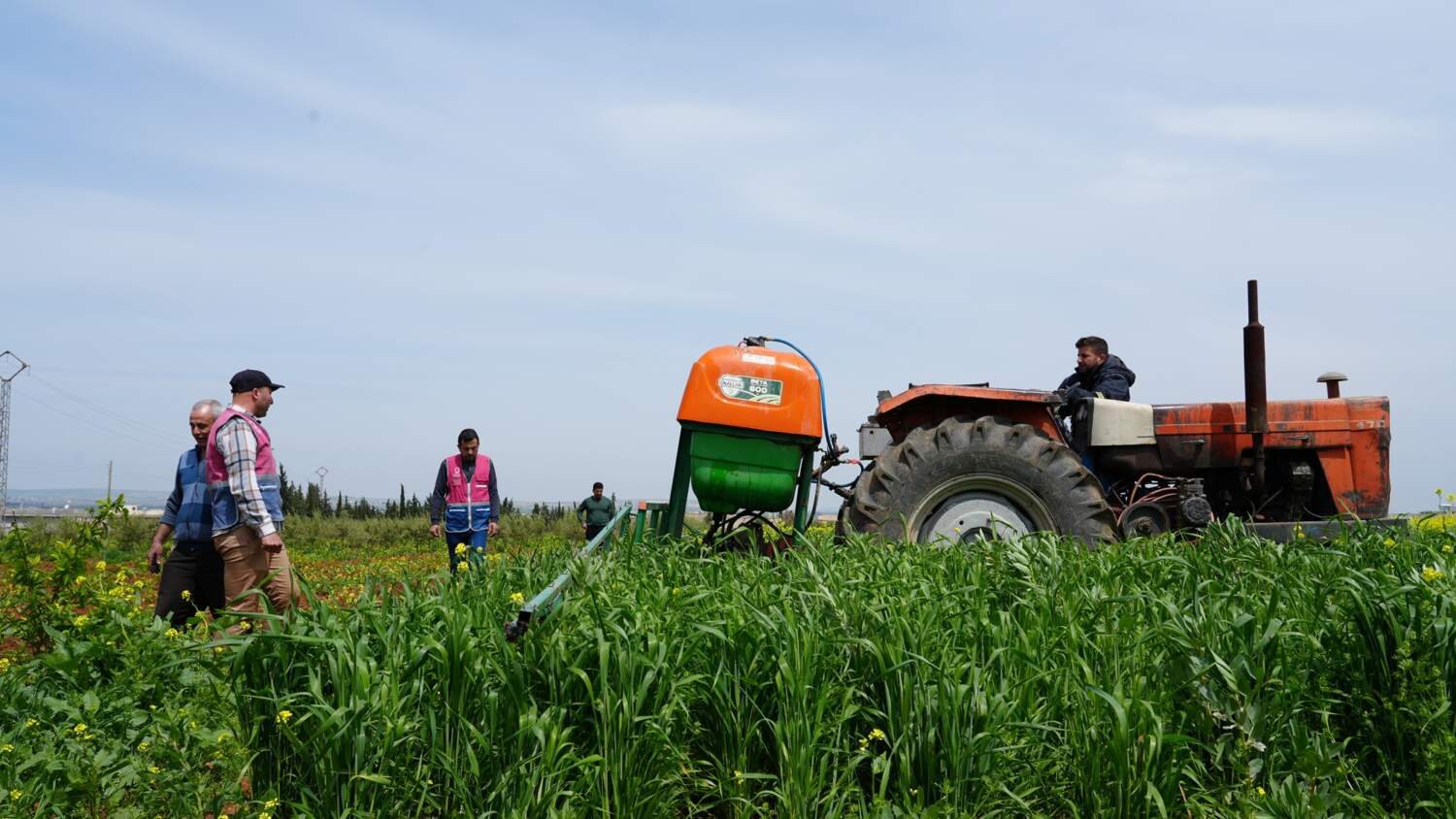
This success resonated deeply on the ground, backed by firsthand testimonies from beneficiaries who felt the change in their daily lives. These stories are not just words. They are living proof that investing in people and local production is the shortest path toward stability.
In short, the main figures in this article are summarized below:
| Measure | Figure |
|---|---|
| Beneficiaries reached | Approximately 875,000 |
| Area cultivated | More than 1,544 hectares |
| Wheat produced | Nearly 5,000 tons |
| National production before the crisis | About 4.5 million tons annually |
| National production now | Roughly 900,000 tons |
A Forward-Looking Vision
Now entering its seventh phase in 2026, the project is moving toward deeper expansion, targeting new geographic areas. It is also increasing reliance on modern agricultural technologies and opening pathways for local investment to strengthen long-term sustainability.
In essence, the goal is no longer limited to meeting immediate needs. It is about building a resilient system capable of withstanding future shocks.
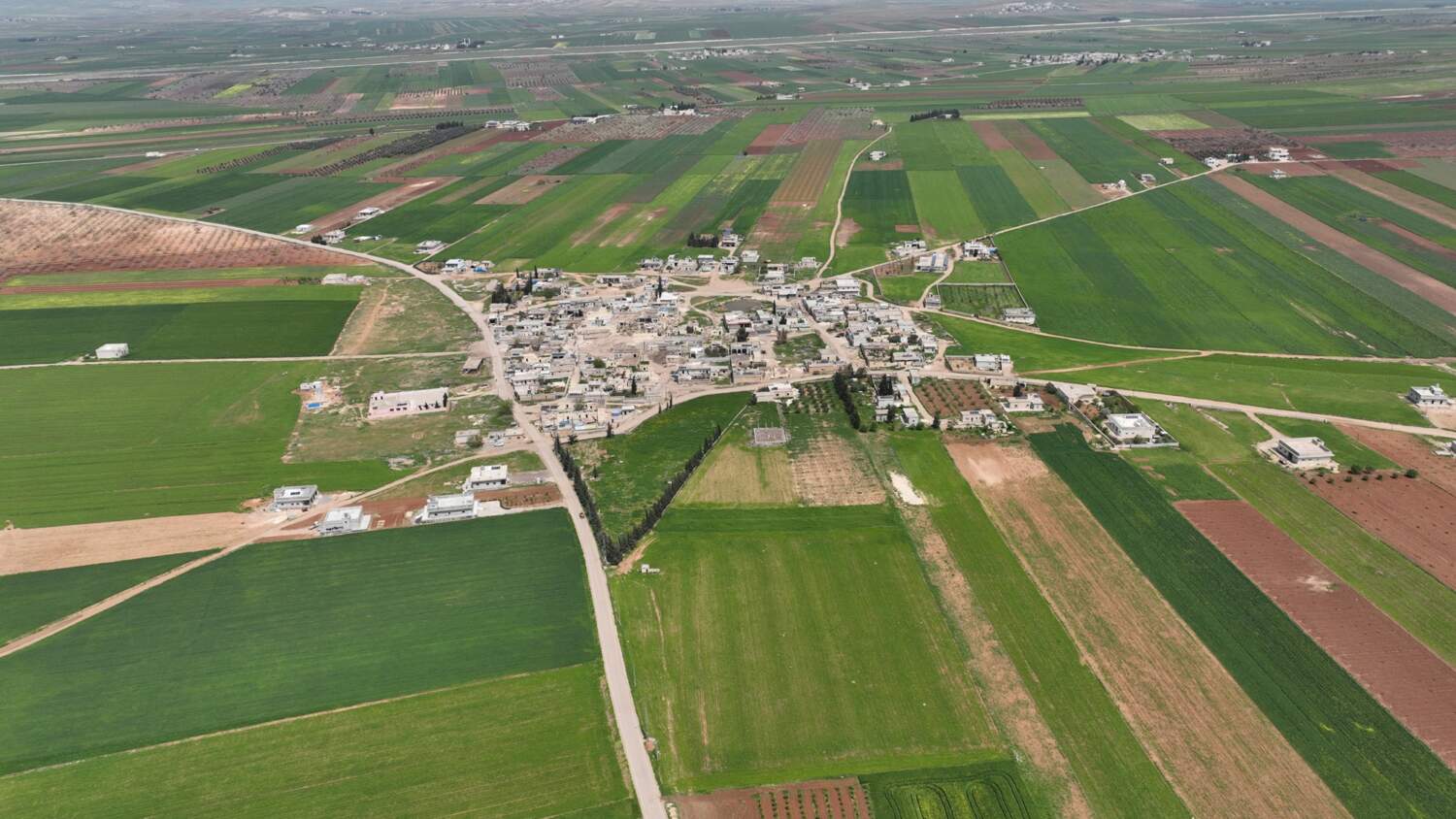
Finally, in northern Syria, where fields once lay silent for years, wheat is growing again, and with it, life is returning. This project has cultivated more than crops. It has restored trust and renewed people’s sense of agency after years of loss. When bread becomes sustainable, it does more than feed hunger. It builds stability, lays the foundation for a functioning economy, and helps reshape an entire future.
Questions About the Wheat Project in Northern Syria
What is the wheat project in northern Syria?
Specifically, it is Qatar Charity’s “Support Wheat Value Chain in North West Syria” project, launched in 2019. It also treats wheat as a fully integrated value chain that begins with the seed and ends with a loaf of bread.
How many people has the wheat project in northern Syria reached?
Overall, the project has reached approximately 875,000 beneficiaries over seven consecutive years, averaging around 125,000 people per cycle.
Why does wheat matter for food security in Syria?
National production has dropped from about 4.5 million tons annually before the crisis to roughly 900,000 tons, which highlights a severe food security gap. The project rebuilds the productive ecosystem instead of focusing solely on bread distribution.