Qatar Charity in Tanzania implemented 3,428 projects between 2020 and 2025, reaching 1,161,603 beneficiaries at a cost of USD 10.2 million, with water and sanitation in the lead.
As part of Qatar Charity’s global network of 35 field offices, the Tanzania Office has strengthened its humanitarian and development presence since launching operations in 2020. Its interventions span water and sanitation, education, health, food security, livelihoods and social protection. This report highlights the office’s key achievements, projects and partnerships between 2020 and 2026.
Establishment
Qatar Charity’s Tanzania Office was established in October 2019 in response to a range of humanitarian and development challenges, particularly limited access to safe water, education, healthcare, food, livelihood opportunities and social protection. These challenges are especially acute among orphans, vulnerable children, low-income families, and underserved rural and coastal communities.
The office’s programmes cover several regions, including Dar es Salaam, Pwani, Lindi, Dodoma, Morogoro, Mwanza, Kigoma and Manyara, as well as Unguja and Pemba in Zanzibar.
Achievements Through the End of 2025
Since 2020, Qatar Charity’s programme portfolio in Tanzania has expanded across a diverse range of humanitarian and development sectors. By the end of 2025, its achievements included:
- 3,428 projects implemented between 2020 and 2025.
- 1,161,603 beneficiaries reached during the same period.
- USD 10.2 million in total programme and project expenditure.
Water and Sanitation: A Leading Area of Intervention
Water and sanitation is the leading area of intervention for Qatar Charity’s Tanzania Office in terms of both the number of projects and overall expenditure. The sector addresses several pressing challenges, including water scarcity, saline groundwater in some coastal areas, limited treatment options, and unreliable electricity supplies for water pumping and treatment.
Between 2020 and 2025, achievements in the sector included:
- 2,415 water and sanitation projects.
- USD 4,137,115 in total project expenditure.
Qatar Charity’s interventions in this sector include drilling boreholes, deploying solar-powered systems, using reverse-osmosis technologies, and establishing water facilities and distribution networks.
Projects Across Multiple Sectors
Alongside water and sanitation, Qatar Charity’s Tanzania Office implemented projects across economic empowerment, education, social welfare, food security, health, social housing, community services and humanitarian relief between 2020 and the end of 2025.
Key areas of intervention included:
- Economic Empowerment: 534 projects, with total expenditure of USD 312,817. Interventions focus on providing productive assets and livelihood opportunities, helping to strengthen household resilience.
- Education and Culture, including mosques and Quranic schools: 214 projects, with total expenditure of USD 2,762,451. Education interventions address gaps in infrastructure and learning environments while supporting access to education for vulnerable children.
- Social Welfare: 193 projects, with total expenditure of USD 1,182,363. Interventions support orphans and vulnerable families through care programmes and the provision of essential assistance.
The office’s activities also extended to other sectors, including:
- Food Security: 29 projects, with total expenditure of USD 38,860.
- Health: 14 projects, with total expenditure of USD 207,760.
- Multi-Service Centres: 11 projects, with total expenditure of USD 1,173,875.
- Social Housing: 10 projects, with total expenditure of USD 106,773.
- Humanitarian Relief: 8 projects, with total expenditure of USD 282,885.
Sponsorships: Sustained Care and Support
Sponsorships form an important part of the social welfare programmes delivered by Qatar Charity’s Tanzania Office, supporting orphans and vulnerable families and providing them with essential assistance.
Figures for 2025/2026 indicate:
- 4,592 people benefiting from social welfare programmes, including sponsored individuals and their families.
- USD 676,925 in total sponsorship expenditure.
- 1,392 orphans sponsored through the office during this period.
The Hanang Disaster: A Model of Emergency Response
Alongside its long-term development efforts, the Tanzania Office responds to disasters and humanitarian emergencies. One notable example was its response to the mudslide that struck Hanang District in Manyara Region in 2024.
The office coordinated its intervention with the disaster-management authorities under the Prime Minister’s Office and the Hanang District administration. The response included:
- Approximately 90 tonnes of food and non-food assistance.
- Assistance reaching approximately 5,000 beneficiaries.
- Ready-to-eat food, dry food rations and hygiene kits.
Integrated Water Projects
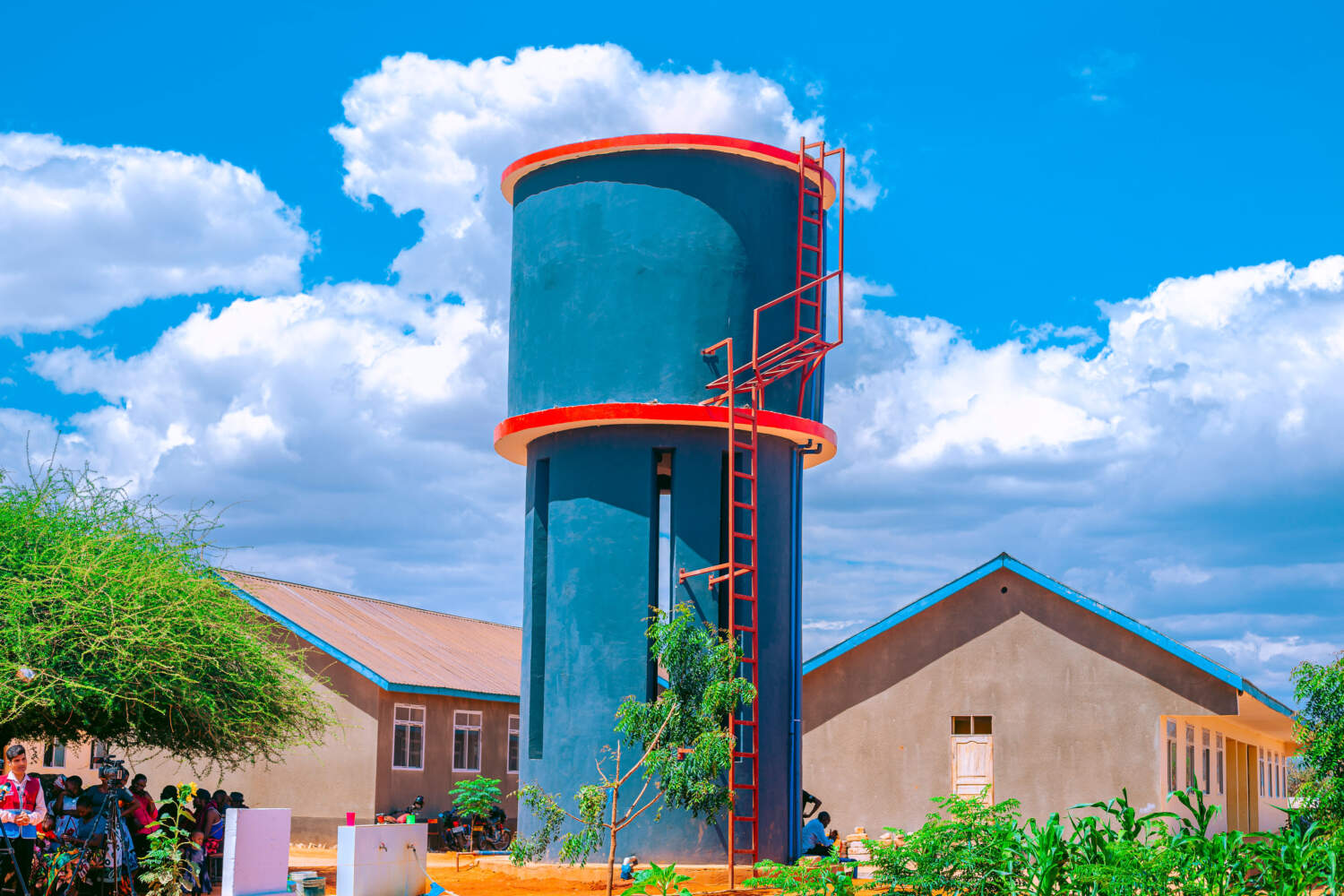
Integrated water projects are among the Tanzania Office’s most prominent models of sustainable development intervention, combining access to safe water with solar-powered technology and infrastructure designed to accommodate future expansion.
- The office has undertaken four integrated water projects in Mikwajuni and Mbuji in Zanzibar, Chamwino in Dodoma, and Sinza in Dar es Salaam. Three have been completed, while the fourth is under implementation.
- The projects rely on deep boreholes ranging from 150 to 200 metres in depth.
- They use fully solar-powered pumping systems, reducing reliance on conventional electricity supplies.
- They feature elevated water tanks with a capacity of 45,000 litres, together with integrated water distribution networks.
- Each project currently serves two villages, with infrastructure that allows distribution networks to be expanded to additional communities in the future.
- Together, the four projects benefit approximately 100,000 people.
- These interventions were developed in response to persistent water shortages in the targeted communities, particularly in areas where residents had to travel long distances to obtain water from unsafe sources.
- Their impact extends beyond the provision of safe water to include improved public health, time savings for families, reduced household expenditure, and greater community resilience.
International Partnerships
In 2025, Qatar Charity signed a Framework Partnership Agreement with the United Nations High Commissioner for Refugees (UNHCR), covering the period 2026–2030. The partnership focuses on protection and water, sanitation and hygiene assistance for refugees, asylum-seekers and host communities.
In November 2025, Qatar Charity also collaborated with UNHCR and the Danish Refugee Council (DRC) at Nyarugusu Refugee Camp to distribute in-kind assistance.
2026: Continuing the Journey
As the Tanzania Office continues to implement its programmes in 2026, figures for the first half of the year show:
- 72,150 beneficiaries reached.
- USD 1.4 million in total programme expenditure.
These results reflect the continued expansion of Qatar Charity’s humanitarian and development presence in Tanzania, alongside efforts to strengthen local and international partnerships, broaden the reach of its programmes and enhance the sustainability of its interventions.
Qatar Charity in Tanzania: Key Figures and Milestones
- October 2019: Official registration of Qatar Charity’s Tanzania Office.
- 3,428 projects: Total number of projects implemented between 2020 and 2025.
- USD 10.2 million: Total expenditure on programmes and projects between 2020 and 2025.
- 1,161,603 beneficiaries: Total number of beneficiaries reached between 2020 and 2025.
- 4,592 people: Total beneficiaries of the office’s social welfare programmes in 2025/2026.
- 1,392 orphans: Number of orphans sponsored through the office.
- USD 1.4 million: Total programme expenditure during the first half of 2026.
- 72,150 beneficiaries: Total number of beneficiaries reached during the first half of 2026.
Qatar Charity in Tanzania in Brief
When was the Tanzania Office established?
It was established in October 2019 and launched operations in 2020.
What are the office’s main sectors?
Water and sanitation leads with 2,415 projects, followed by economic empowerment, education and culture, and social welfare.
How many orphans does the office sponsor?
1,392 orphans were sponsored through the office during 2025/2026.
How did the office respond to the Hanang disaster?
It provided about 90 tonnes of food and non-food assistance, reaching approximately 5,000 beneficiaries.