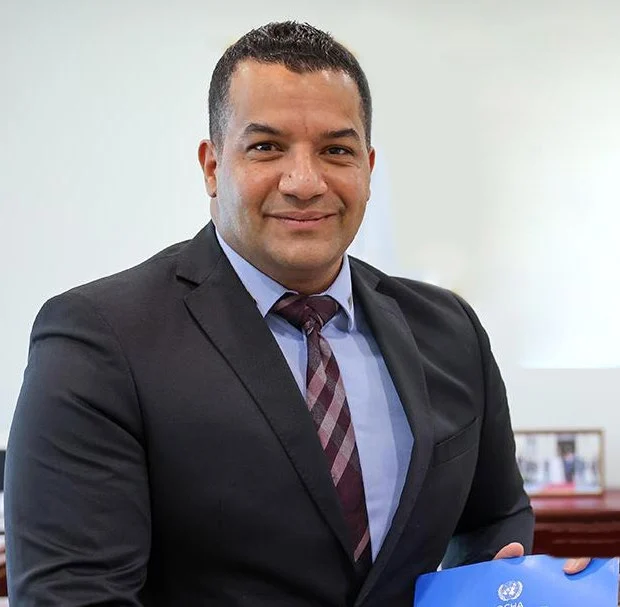
Ahmed Marai, Head of the United Nations Office for the Coordination of Humanitarian Affairs (OCHA) office in Doha, stated that coordination, cooperation, partnerships and alliances among the United Nations and international and local humanitarian organizations are pivotal for an effective and impactful humanitarian response, especially amid the protracted crises and escalating disasters in the Middle East and North Africa (MENA) region.
In an exclusive interview with Ghiras magazine, he emphasized that donors and international organizations should explore and implement flexible funding mechanisms for a swift and adaptive response to emerging crises. He added that Qatar Charity’s commitment to sustainable development positions it to play a pivotal role in the recovery and reconstruction phases, and highlighted the growing cooperation between Qatar Charity and OCHA, particularly the Memorandum of Understanding then due to be signed. Below is the full interview.
Interview Highlights
- Coordination and partnerships among the UN and international and local organizations underpin an effective humanitarian response.
- The crises of 2023 in the MENA region disrupted essential services and increased displacement.
- Flexible funding, such as multi-year funding and pooled funds, speeds up the response to emerging crises.
- Qatar Charity committed US$10 million to OCHA for 2024.
How the Crises of 2023 Affected Communities
- The MENA region witnessed major earthquakes, floods and conflicts in 2023. What are the impacts of these escalating crises and disasters on communities and their infrastructure?
In 2023, the MENA region faced a series of significant challenges, including protracted crises, disasters, earthquakes, floods and, most recently, the conflict in Gaza. These events have had profound impacts on communities.
Firstly, the prolonged nature of several crises has strained the resilience of communities, leaving them vulnerable to multiple humanitarian needs. Essential services, such as health and education, are often disrupted, affecting people’s well-being and future prospects.
People are increasingly fleeing their homes, both within their countries and across borders. This places burdens on host communities and leads to increased competition for limited resources, adding to the complexity of the humanitarian response.
Natural disasters, including earthquakes and floods, have exacerbated existing vulnerabilities. Already strained infrastructure, such as roads and schools, has been further damaged, impeding access to essential services.
Conflicts in the region have profound and lasting effects on communities and their infrastructure. Displacement, the destruction of homes and critical infrastructure, and disruptions to basic services have become persistent features of conflict-affected areas. The protracted nature of conflicts hampers recovery efforts and impedes the rebuilding of essential services and livelihoods.
In response to these challenges, OCHA continues to work closely with partners to coordinate and deliver effective humanitarian assistance. Addressing the diverse impacts of crises and disasters requires a comprehensive approach that considers the specific needs of affected communities, with a focus on building resilience, restoring essential services and supporting recovery efforts.
Our goal is to ensure that humanitarian aid reaches the people who need it most, and we advocate for increased support from the international community to mitigate the immediate and long-term impacts of crises on communities and their infrastructure in the MENA region.
Additional Responsibilities for OCHA
- Will this situation, with all its consequences, place additional responsibilities and tasks on United Nations agencies, particularly OCHA?
In the face of evolving and complex humanitarian challenges in the MENA region, the role of the United Nations, particularly OCHA, is increasingly critical. Multifaceted crises, such as conflicts, natural disasters and extended emergencies, place additional responsibilities on OCHA and UN agencies.
Coordination and response planning: With the complexity of crises requiring a well-organized and collaborative response by various humanitarian actors, OCHA ensures effective coordination among UN agencies, NGOs and others to avoid duplication, identify gaps and deliver timely and efficient assistance.
Resource mobilization: Escalating crises often result in increased humanitarian needs, requiring additional resources. OCHA leads in mobilizing funding and resources, advocating for donor support and ensuring that the humanitarian response is adequately financed. This involves engaging with international partners, governments and donors to secure financial support for humanitarian programmes.
Advocacy and humanitarian diplomacy: OCHA advocates to heighten awareness of the humanitarian context, uphold humanitarian principles and promote humanitarian diplomacy. In the MENA region, where geopolitical complexities frequently intersect with humanitarian issues, OCHA facilitates access for aid delivery and champions the protection of vulnerable populations.
Capacity building and preparedness: Crises are dynamic and require continuous capacity building and preparedness measures. OCHA works to enhance the capacity to respond to emergencies effectively through training, knowledge sharing and robust preparedness plans that mitigate the impact of future crises.
Data and analysis: OCHA provides critical data and analysis to inform decision-making and response strategies. By monitoring and analysing the humanitarian situation, it helps identify trends, assess needs and adjust response efforts accordingly, ensuring a more targeted and evidence-based approach to humanitarian assistance.
A Collaborative and Inclusive Approach
- How can international and local organizations play a more impactful role in addressing the damage and risks posed by the disasters and crises that have affected the region, especially this year?
Addressing the damage and risks posed by the escalating crises and disasters in the MENA region requires a concerted effort from both international and local organizations. This year, we witnessed major events, such as earthquakes, floods and conflicts, which placed additional responsibilities on the United Nations, particularly OCHA. From my perspective as Head of OCHA’s office in Qatar, a collaborative and inclusive approach is crucial for an effective response.
Firstly, enhanced coordination and cooperation between international and local organizations are paramount. This involves improving communication, sharing information and harmonizing efforts to avoid duplication and ensure a more cohesive response. Regular joint coordination meetings, information-sharing platforms and unified planning processes contribute to a more effective overall response.
Investing in local capacities is also critical. International organizations should prioritize building the capacities of local partners and institutions through training, knowledge sharing and technology transfer. This empowers local organizations to lead in disaster response and preparedness, ensuring a more sustainable and contextually relevant response.
Empowering communities to actively participate in their own resilience is fundamental. International and local organizations should collaborate to engage communities in risk reduction activities, disaster preparedness initiatives and awareness campaigns. This fosters a sense of ownership and resilience.
The adoption of innovative technologies, such as artificial intelligence, remote sensing and data analytics, can significantly enhance the efficiency and effectiveness of disaster response. Collaboration between international and local organizations can facilitate the adoption of advanced technologies for early warning systems, damage assessments and resource allocation.
Empowering communities to actively participate in their own resilience is fundamental.
Donors and international organizations should explore and implement flexible funding mechanisms for a swift and adaptive response to emerging crises. This includes multi-year funding, pooled funds and contingency financing for the rapid deployment of resources based on evolving needs on the ground.
International organizations can leverage their influence to advocate for inclusive policies at both local and international levels. This involves promoting policies that prioritize vulnerable populations, uphold human rights and address the root causes of crises.
The Cornerstone
- To what extent can coordination, cooperation, partnerships and alliances among the UN and international and local humanitarian organizations play a more effective role in this field?
Coordination, cooperation, partnerships and alliances among the UN and international and local humanitarian organizations are pivotal for an effective and impactful humanitarian response. As Head of the OCHA office in Qatar, I recognize the significance of these collaborative efforts, especially in the context of the escalating crises and disasters in the MENA region.
Coordination is the cornerstone of a successful humanitarian response. It ensures that the efforts of various organizations are streamlined, avoiding duplication of activities and maximizing the use of limited resources. Coordinated planning, joint assessments and regular information sharing are essential components of this process.
Cooperation among organizations, both international and local, is equally crucial. By pooling expertise, resources and capacities, organizations can address the multifaceted challenges posed by crises more comprehensively. This collaborative approach fosters a synergy that enhances the overall impact of humanitarian interventions.
Partnerships with local organizations are instrumental in ensuring contextually relevant and sustainable responses. Local organizations possess invaluable knowledge about the communities they serve, and partnering with them enhances the cultural sensitivity and effectiveness of interventions. Moreover, empowering local partners strengthens the overall resilience of communities.
Alliances among the UN and international and local humanitarian organizations amplify the collective impact of humanitarian initiatives. These alliances enable each organization’s strengths and resources to be leveraged, leading to a more robust and adaptable response to emerging challenges. Through strategic alliances, organizations can share best practices, enhance innovation and collectively advocate for systemic changes that address the root causes of crises.
In the region, we have experienced the positive outcomes of strong coordination, cooperation, partnerships and alliances. The collaboration between OCHA, Qatar Charity and other local partners has facilitated a more efficient and targeted response to humanitarian needs. By working together, we have been able to implement projects that address immediate needs while also contributing to long-term resilience-building efforts.
Resource Mobilization
- International and local humanitarian organizations are more effective in the immediate response phase but tend to be slower in the recovery and reconstruction phases. How can these phases be activated, particularly considering the extensive infrastructure damage in the affected countries during 2023?
In addressing the challenges of recovery and reconstruction after crises, it is crucial to acknowledge the complexity of these phases and the need for sustained and collaborative efforts. The recovery and reconstruction phases often require longer timelines due to the intricate nature of rebuilding infrastructure and restoring communities. The initial rapid response is vital for saving lives, but the subsequent phases demand careful planning, resource mobilization and a comprehensive understanding of the unique needs of each affected community.
I would like to emphasize the need for a continuum of support that moves seamlessly from the immediate response to long-term recovery and reconstruction. This involves sustained engagement with affected communities to understand their evolving needs and aspirations. Collaborating with local organizations, which possess invaluable knowledge of the affected areas, is instrumental in expediting the recovery process.
Qatar Charity’s commitment to sustainable development positions it to play a pivotal role in supporting the recovery and reconstruction phases.
Resource mobilization is a critical aspect of the recovery and reconstruction phases, requiring continued support from the international community. Innovations in financing mechanisms, such as public-private partnerships, can attract investment in large-scale infrastructure projects. The use of technology, data-driven approaches and flexible adaptive planning are essential to enhance the efficiency and effectiveness of recovery efforts.
Qatar Charity’s commitment to sustainable development positions it to play a pivotal role in supporting the recovery and reconstruction phases. In this context, I would like to emphasize the significance of the Memorandum of Understanding set to be signed between OCHA and Qatar Charity on the margins of the launch of the Global Humanitarian Overview 2024 from the Doha Forum platform on 11 December 2023. Under this landmark agreement, Qatar Charity has committed to providing generous funding of US$10 million to OCHA for 2024, marking a transformative collaboration.
Read also: Qatar Charity’s Active Presence at International Humanitarian Events and Conferences