At a Glance
Qatar Charity is responding to shifts in the global humanitarian and development landscape through four key areas:
- Investing in sustainable humanitarian financing, with the Global Islamic Fund for Refugees as a leading example.
- Strengthening multilateral development partnerships, including Tadamon 2.0 – Seeds of Solidarity.
- Advancing localization by enabling local actors to play a greater role in leadership and implementation.
- Harnessing artificial intelligence and digital transformation to improve efficiency, transparency and impact measurement.
Together, these approaches reflect a broader shift from responding to crises alone towards building more resilient and sustainable systems.
A Changing World, a Changing Humanitarian Sector
Humanitarian and development work is being reshaped by increasingly complex crises, expanding forced displacement, rising food insecurity and economic hardship, and growing pressure on humanitarian organizations as traditional sources of funding decline.
At the same time, the international humanitarian system is exploring new approaches built around innovative financing, social capital, Islamic finance, multilateral partnerships, local leadership, digital transformation and artificial intelligence. The traditional donor-recipient model is also gradually giving way to more equitable approaches that connect humanitarian response with development and resilience.
Qatar Charity’s experience in recent years reflects an effort to adapt to these global shifts. Beyond expanding its humanitarian programs, the organization has contributed to innovative financing mechanisms, invested in international partnerships, strengthened the role of local actors and integrated technology across its institutional and humanitarian work.
How Is Qatar Charity Addressing the Humanitarian Funding Gap?
The humanitarian funding gap has become one of the most pressing challenges facing international aid organizations. As displacement rises and humanitarian needs continue to grow, traditional funding models based largely on donations and short-term grants are increasingly struggling to keep pace with the rapidly expanding demand.
Against this backdrop, Qatar Charity joined the Global Islamic Fund for Refugees, an emerging model for sustainable humanitarian financing. Launched in 2022 through a partnership between UNHCR, the Islamic Development Bank and the Islamic Solidarity Fund for Development, the Fund combines Sharia-compliant endowment and non-endowment resources to support refugees, internally displaced people and host communities.
The Fund is built on an innovative endowment model, investing waqf capital and directing the returns towards education, healthcare, water, livelihoods, economic empowerment and emergency response. Rather than exhausting available resources within a single funding cycle, the model is designed to generate a renewable source of support.
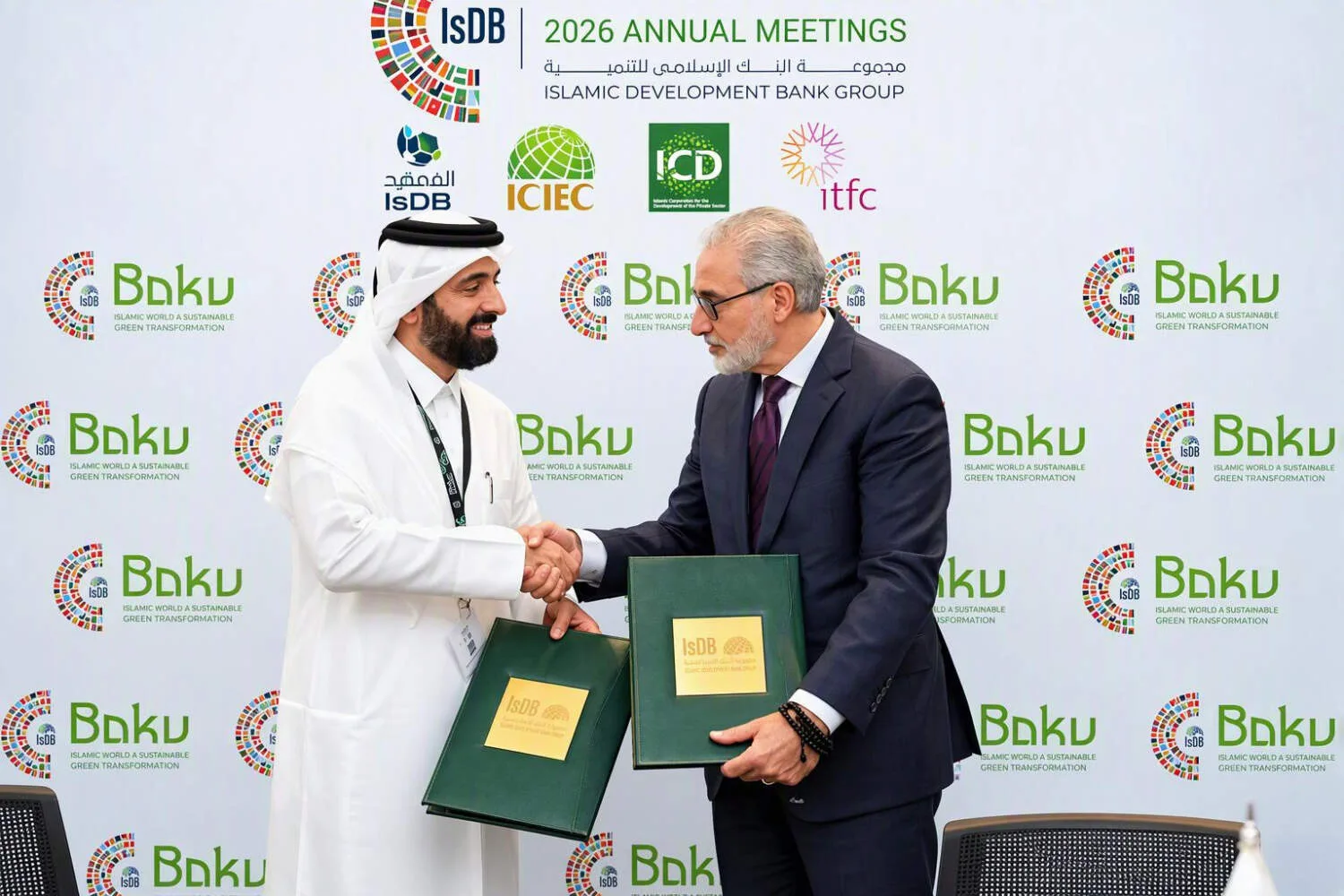
In 2026, Qatar Charity signed a strategic agreement to contribute US$10 million to the Fund as an endowment. The contribution also enabled Qatar Charity to join the Fund’s Steering Committee and participate in reviewing and approving allocations for humanitarian and development projects.
The significance of this step extends beyond the size of the contribution. It reflects Qatar Charity’s shift towards financing models built on sustainability, empowerment and resilience, trends that are increasingly shaping the future of humanitarian financing worldwide.
The initiative also comes as UNHCR faces significant funding pressures. By August 2025, only 38% of its required global budget of US$10.8 billion had been funded, leaving millions of refugees at risk of losing access to essential services, including shelter, food and water.
Why Has Qatar Charity’s Contribution to the Global Islamic Fund for Refugees Drawn UN Recognition?
Qatar Charity’s contribution to the Global Islamic Fund for Refugees has received recognition from senior UNHCR officials, highlighting the potential of combining Islamic endowment models with sustainable humanitarian financing.
Traditional donations alone will not be sufficient to meet future needs. Sustainable financing mechanisms will increasingly be needed to maintain longer-term flows of resources.
Dr. Khaled Khalifa, Senior Adviser to the High Commissioner on Islamic Philanthropy and UNHCR Representative to Gulf Cooperation Council Countries described Qatar Charity’s contribution as a model of strategic cooperation capable of providing sustainable resources for refugees and displaced communities amid growing global humanitarian challenges.
Mr. Ahmed Mohsen, UNHCR Representative in the State of Qatar, also emphasized the role of the partnership in addressing humanitarian funding gaps and providing longer-term support to vulnerable communities through innovative financing models that foster resilience and self-reliance.
Such perspectives reflect a broader recognition across the humanitarian sector that traditional donations alone will not be sufficient to meet future needs. Sustainable financing mechanisms will increasingly be needed to maintain longer-term flows of resources.
Investing in Multilateral Partnerships
Alongside the Global Islamic Fund for Refugees, Qatar Charity is participating in Tadamon 2.0, an Islamic Development Bank programme designed to strengthen the resilience of vulnerable communities and empower local civil society organizations.
The first phase reached around 442,000 people with essential services, supported more than 245,000 people with food security assistance, strengthened the capacities of 728 civil society organizations and mapped more than 5,520 organizations across 34 countries.
The second phase moves towards a more ambitious model focused on sustainability and long-term impact. It aims to:
- Enable 500,000 people to access essential services.
- Support 16,000 low-income households.
- Train 1,500 civil society organizations through the Tadamon Development Academy.
- Expand the use of Islamic social finance, artificial intelligence, blockchain and institutional governance.
Qatar Charity has allocated a total contribution of US$10 million to the programme, reflecting its growing emphasis on multilateral partnerships as a way of responding to increasingly complex and interconnected challenges.
Turning Localization into Practice
Localization has emerged as one of the defining shifts in humanitarian action, with growing calls for local actors to assume a greater role in planning, implementation and leadership.
Qatar Charity joined the Grand Bargain as its first Arab signatory and has sought to translate localization commitments into a measurable institutional framework.
The share of Qatar Charity funding counted towards localization rose from 21% in 2024 to 30% in 2025, while multi-year funding increased from 9% to 65% over the same period. Longer-term financing can give local partners greater scope for planning and strengthening institutional sustainability.
How Is Ma’een Center for Institutional Development Driving Localization?
The Ma’een Center for Institutional Development represents one of Qatar Charity’s long-term strategic investments in localizing humanitarian and development action.
Ma’een began in 2023 as an internal initiative focused on evaluating the capacities of local organizations and strengthening institutional readiness. In 2026, it evolved into a specialized center based in Doha. Its model is built on the premise that localization requires more than funding: it also requires assessing capacity, building institutional readiness and connecting organizations with opportunities for financing and partnerships.
The Center has developed a methodology covering 11 core institutional areas, including governance, financial management, human resources, project management, monitoring and evaluation, risk and compliance, supply chains, partnerships and localization.
Since 2024:
- 50 local organizations across 10 countries have undergone comprehensive institutional assessments.
- 10 organizations have benefited from capacity-building programs.
- A practical database has been developed to track organizational readiness and levels of institutional maturity.
Ma’een also plays a central role in Tadamon 2.0 by developing assessment, accreditation and institutional qualification frameworks and linking capacity development with financing opportunities and international partnerships.
In doing so, the Center seeks to translate localization from a global commitment into a measurable and sustainable institutional practice.
Putting AI to Work for Humanitarian Action
Another major transformation in humanitarian work is the shift from conventional data management towards artificial intelligence and advanced analytics to support decision-making.
Localization requires more than funding: it also requires assessing capacity, building institutional readiness and connecting organizations with opportunities for financing and partnerships.
Qatar Charity operates in more than 70 countries, supported by a technology infrastructure that includes cloud services, resource management, donor relationship management, governance, risk and compliance systems, and more than 300 business intelligence and operational analytics dashboards.
The organization uses artificial intelligence to support:
- Needs analysis and resource allocation.
- Project and program management.
- Research, proposals and technical documentation.
- Fundraising efficiency.
- Predictive analytics.
- Decision-making, procurement and supply-chain management.
Alongside these applications, Qatar Charity places emphasis on data protection, privacy, cybersecurity and staff capabilities to support the safe and responsible use of AI.
These efforts align with Qatar Charity’s 2026–2030 Strategy, which seeks to strengthen financial sustainability and resource growth by diversifying funding sources and developing innovative financing models. The strategy also focuses on building advanced institutional and operational capabilities through effective governance, digital transformation, innovation and organizational excellence, while strengthening partnerships with stakeholders locally and internationally.
The strategy further emphasizes stronger relationships with donors, built around partnership, trust and transparency, alongside improving the donor experience and communicating the measurable impact of contributions more clearly.
Key Figures
- US$10 million contributed by Qatar Charity to the Global Islamic Fund for Refugees.
- US$10 million allocated by Qatar Charity to Tadamon 2.0.
- Qatar Charity’s localization funding increased from 21% to 30%.
- Qatar Charity’s multi-year funding increased from 9% to 65%.
- 50 local organizations across 10 countries assessed through the Ma’een Center.
- 1,500 civil society organizations targeted for training under Tadamon 2.0.
Responding to a Changing Humanitarian Landscape
Qatar Charity’s response to the changing humanitarian landscape brings together sustainable endowment-based financing, multilateral partnerships, local leadership, institutional capacity building, technology and artificial intelligence.
Rather than focusing solely on crisis response, the organization is moving towards longer-term models that address underlying vulnerabilities, strengthen resilience and expand the contribution of humanitarian action to sustainable development.
At a time when the gap between humanitarian needs and available resources continues to widen, this approach reflects an effort to help shape a more sustainable and equitable future for humanitarian action.
By Ali Abualnassr AlRachied