Opens in a new tab

Humanitarian Financing: The Crisis and the Shift

An infographic displaying the figures of the humanitarian funding crisis in 2025, and a map of the funding shift from traditional aid to social investment and partnerships.

Infographic, Special Feature

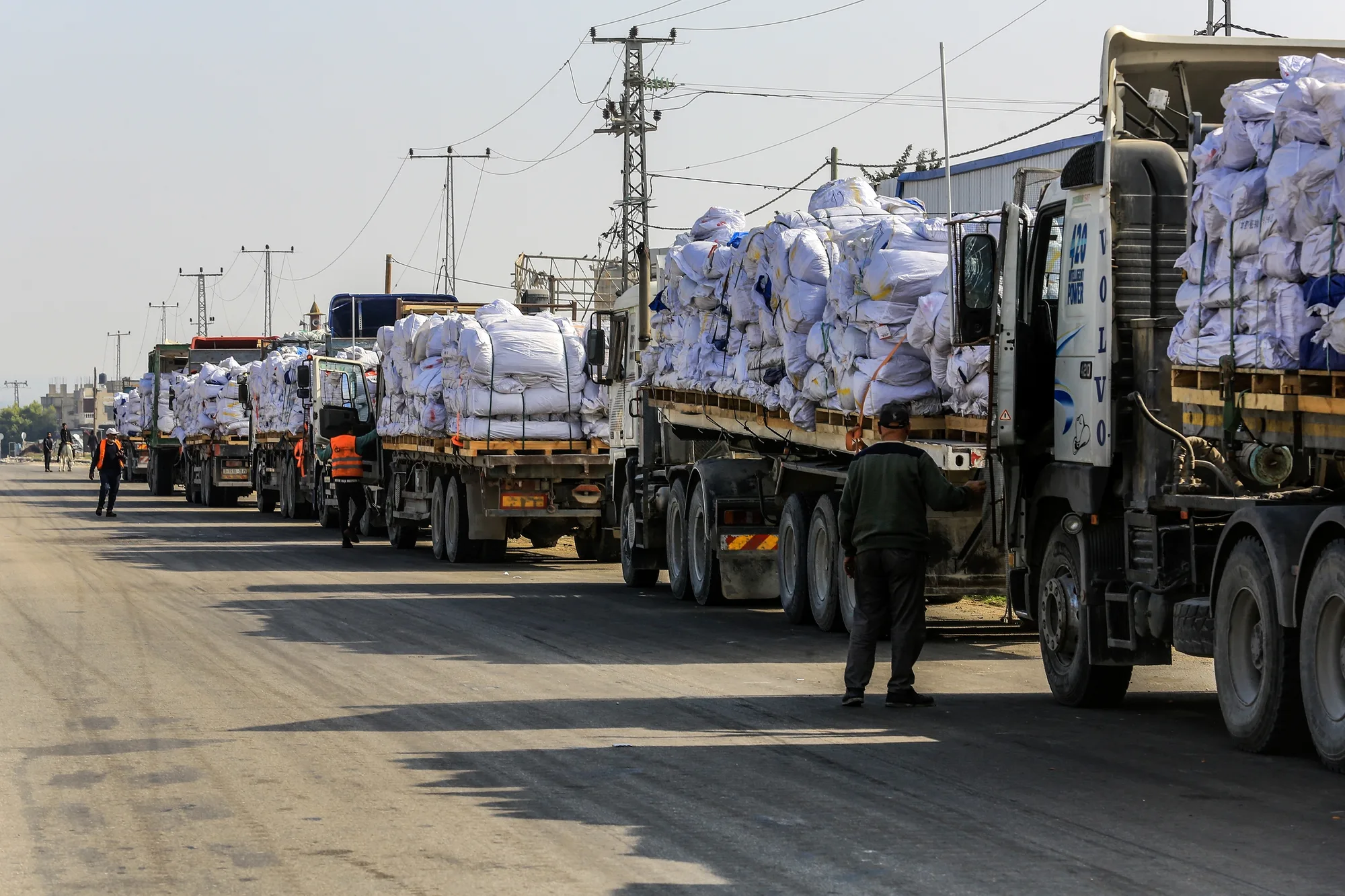
Humanitarian funding gap: a digital globe linked by lines of light to container ships in a port, with icons for relief, health care, education and solidarity

The global humanitarian system is facing an unprecedented funding crisis, threatening the ability of humanitarian and development organizations to meet the growing needs of hundreds of millions of people worldwide. This infographic brings together key figures and indicators that reveal the scale of the crisis.
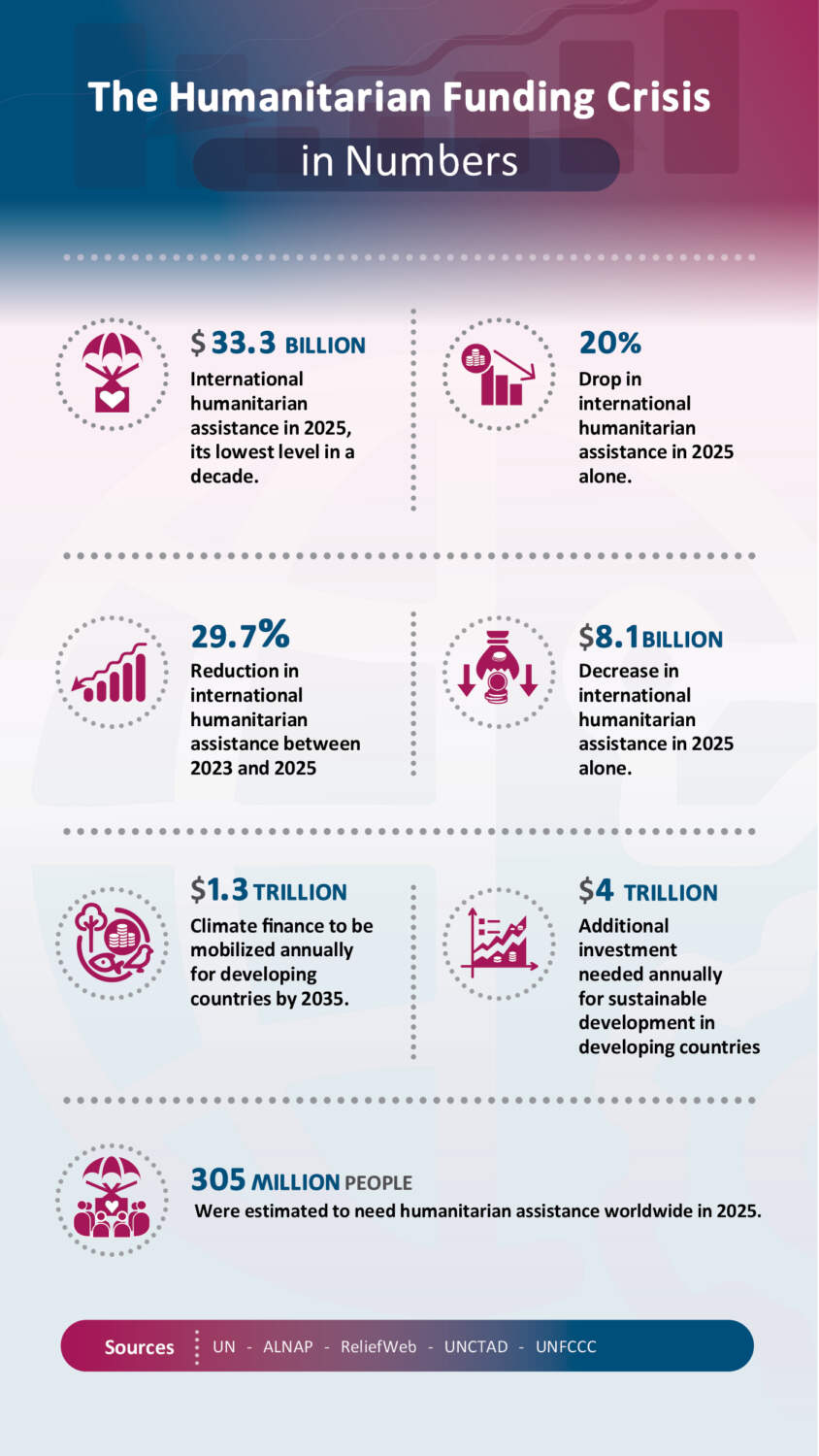
Infographic: the humanitarian funding crisis in numbers. International humanitarian assistance fell to USD 33.3 billion in 2025, its lowest level in a decade, a 20% drop that year and 29.7% since 2023, while 305 million people needed humanitarian assistance. Sources: UN, ALNAP, ReliefWeb, UNCTAD, UNFCCC.

As humanitarian needs rise and funding gaps widen, the way humanitarian action is financed is rapidly evolving. This infographic captures the key trends shaping that transformation, from traditional aid models to social investment, strategic partnerships and innovative financing designed to deliver more sustainable impact.
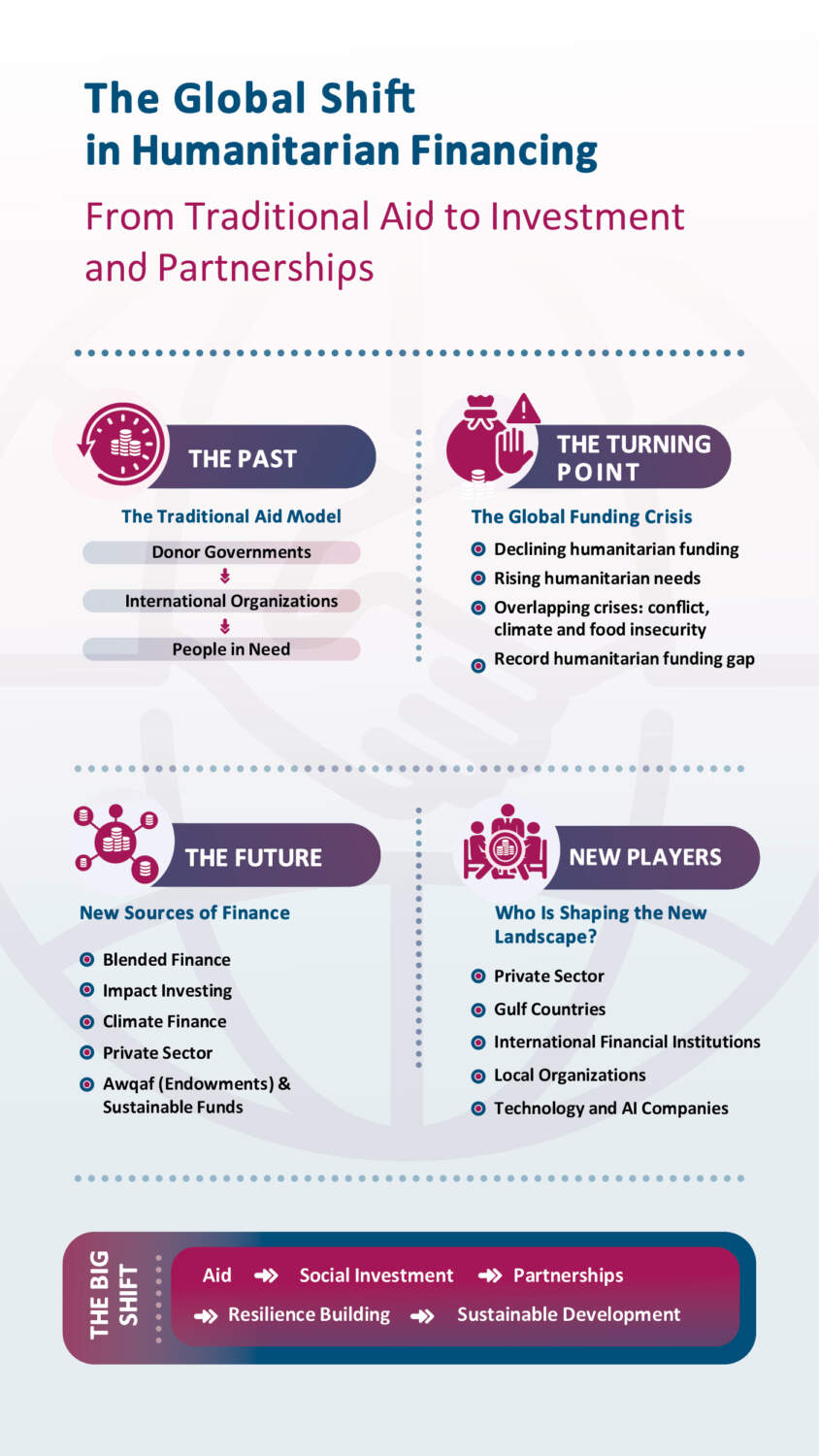
Infographic: the global shift in humanitarian financing, from the traditional aid model to new sources such as blended finance, impact investing, climate finance, the private sector and awqaf, and new players including Gulf countries, local organizations and technology companies.

Read also: Beyond Aid: Rethinking the Future of Humanitarian Action and How Qatar Charity Adapts to a Changing Landscape.
The humanitarian funding gap in numbers

The UN and its partners seek USD 33 billion to reach 135 million people in 50 countries, including USD 23 billion as an immediate priority for 87 million people, according to UN News.

Only USD 12 billion, the lowest funding in a decade, according to UN News.

In 2026 it contributed USD 10 million as an endowment to the Global Islamic Fund for Refugees and allocated USD 10 million to the Tadamon 2.0 programme, according to Ghiras.

Yes. The share of its funding counted towards localization rose from 21% in 2024 to 30% in 2025, and multi-year funding rose from 9% to 65%.