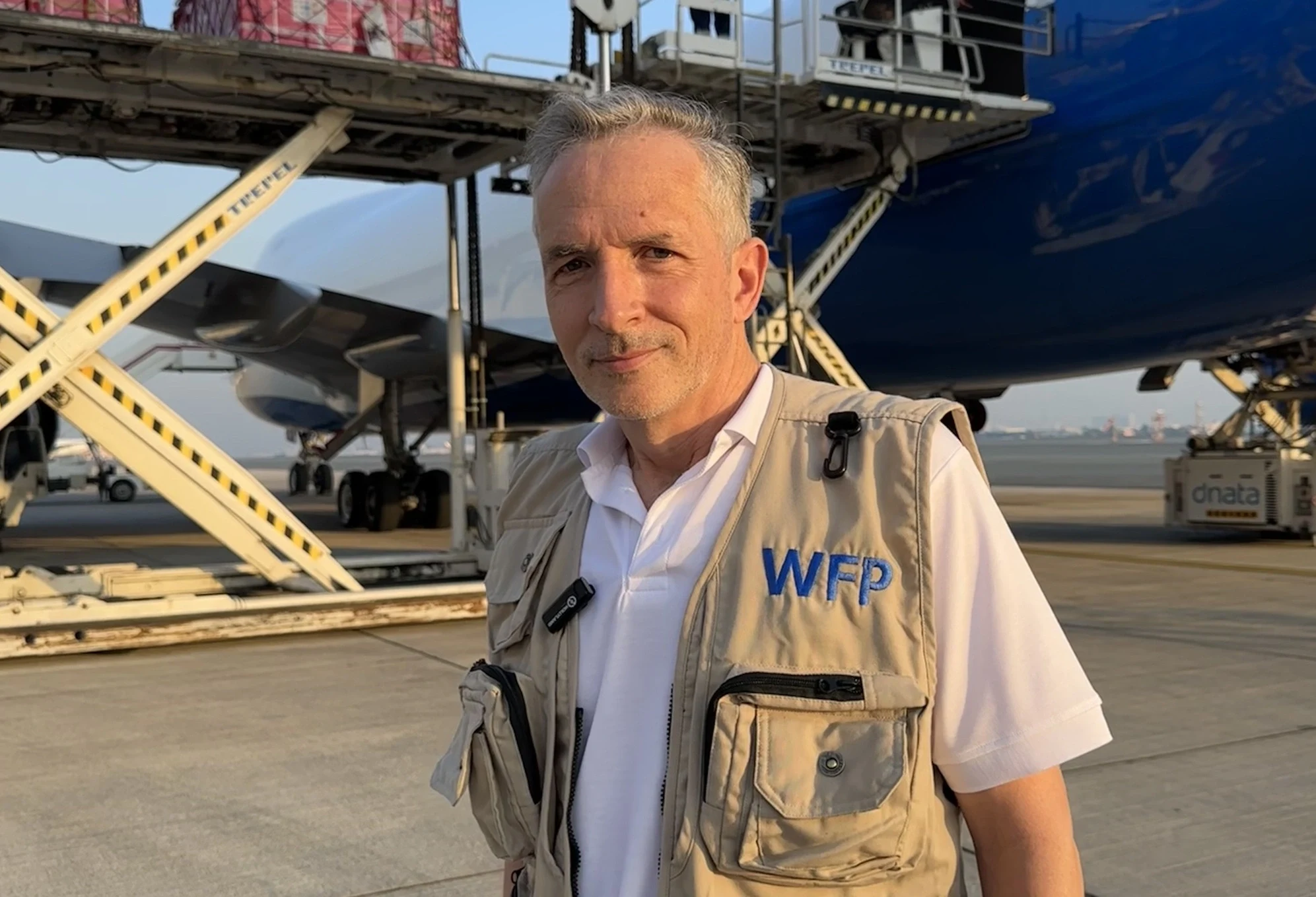
Stephen Anderson, WFP Representative to the GCC, says food aid delivery in crisis zones such as Gaza and Sudan depends on innovative solutions, from digital cash transfers to community kitchens and airlifts, and on strong partnerships such as WFP’s partnership with Qatar Charity.
Continuous wars in conflict zones like Gaza and Sudan are pushing people into ever harsher conditions and making them heavily reliant on humanitarian aid, including food. As a result, Sudan is now the world’s largest hunger crisis. How does the World Food Programme assess these risks? How does it overcome the challenges that block critical aid, and what is its vision for sustainable solutions to food risks in conflict zones? Ghiras put these questions, among others, to Stephen Anderson.
Interview Highlights
- Sudan is now the world’s largest hunger crisis, and famine has been confirmed in parts of North Darfur.
- WFP assisted around 5.4 million people in Sudan in 2024.
- During the rainy season, aid convoys can take ten times longer to arrive.
- WFP supports community kitchens that bring hot meals to 175,000 people a day in Sudan.
- WFP describes Qatar Charity as a valuable partner and wants to deepen the partnership.
How Does WFP Assess the Situation in Gaza and Sudan?
The humanitarian crises in both Gaza and Sudan remain extremely distressing, with the ongoing conflicts taking a heavy toll on millions of lives. In Gaza, the widespread destruction of infrastructure, coupled with continuing violence, has left many families in urgent need of basic necessities like food, clean water and healthcare. Persistent access restrictions and hostilities have crippled livelihoods and made people heavily reliant on humanitarian aid. The situation is especially dire for vulnerable groups such as women, children and the elderly, who are disproportionately affected.
In Sudan, the conflict has displaced vast numbers of people, particularly in areas like Darfur and Khartoum. Sudan is now the world’s largest hunger crisis, and famine has been confirmed in parts of North Darfur. Health services have been significantly impaired, with facilities either damaged or facing critical shortages of essential medicines and supplies.
Sudan is now the world’s largest hunger crisis, and famine has been confirmed in parts of North Darfur.
The World Food Programme is saving thousands of lives every single day in Sudan, overcoming challenges to deliver vital food and nutrition assistance in one of the most dangerous warzones in the world. WFP assisted around 5.4 million people in 2024, but significantly more assistance is needed to halt famine and prevent it from spreading.
What Has the War Done to Food, Health and Living Conditions?
The conflicts in Gaza and Sudan have caused profound and lasting impacts on food security, healthcare and overall living conditions. In both regions, infrastructure destruction, mass displacement and the collapse of local economies have made it increasingly difficult for families to access food.
As a result, many are facing food shortages, skyrocketing prices and shrinking incomes. Healthcare systems are under severe strain, with medical facilities damaged and resources stretched thin, leading to a steep decline in public health and in the quality of life of those affected.
What Are the Biggest Challenges of Food Aid Delivery in Crisis Zones?
Humanitarian organizations like WFP encounter a range of challenges when delivering food assistance in conflict zones such as Gaza and Sudan. One of the primary issues is the security risk, with active hostilities and violence putting aid workers and the people we serve in constant danger.
We have to pass through flooded and muddy roads, which in some cases makes deliveries take ten times longer.
Access to affected populations is often obstructed by access restrictions, checkpoints and bureaucratic red tape, making it incredibly difficult to deliver food and other essential supplies on time.
WFP is working tirelessly in an extremely restrictive operational environment. We have to pass through flooded and muddy roads during the rainy season, especially in Sudan, which in some cases makes deliveries take ten times longer. We need to ensure the safe delivery of aid amid threats against aid workers and transporters, and find alternative ways to get assistance into active conflict areas where it is not safe for aid trucks to pass because of airstrikes and bombing.
How Can International Organizations Overcome Access Barriers?
UN organizations and international bodies need a multifaceted approach tailored to the context in each country. This involves negotiating safe humanitarian corridors with the parties to the conflict and working closely with local authorities to secure unhindered access.
Diplomatic efforts, including with key member states, should be ramped up to help ease and lift bureaucratic obstacles. Technology can also help, with innovations such as remote monitoring systems, digital cash transfers and digital registration simplifying logistics and improving the efficiency of aid distribution.
What Innovative Solutions Does WFP Use to Deliver Food Aid?
Despite the difficult conditions, WFP has implemented several innovative strategies, tailored to each operating context, to ensure food aid reaches the people it is meant for. We use digital cash transfers, which let beneficiaries buy food from local markets, giving them greater dignity and flexibility in their choices.
WFP also uses advanced logistics technologies, such as blockchain and biometric systems, to improve transparency and efficiency in distributing aid. Its food voucher programme in the West Bank has expanded six-fold, and as of September 2024 we were reaching nearly 215,000 affected Palestinians with cash-based transfers, providing top-ups to national social safety net systems and one-off cash for forcibly displaced civilians, in collaboration with the Ministry of Social Development and UNRWA.
In Gaza, a new round of multi-purpose cash assistance reached 1,400 families, each receiving 1,000 ILS (around $266) through e-wallets and cash distribution. As of 16 September 2024, almost 80 percent of these families had redeemed their entitlements through five vendors in central Gaza.
WFP also runs a self-registration link to improve data collection, beneficiary management and feedback. The link has facilitated 1.2 million registrations, including 24,966 between 8 and 14 September 2024. Only 30 percent of those who registered received food assistance, which shows the challenges WFP still faces in reaching affected people. In some cases, alternative supply routes and emergency airlifts are used to reach remote or hard-to-access areas.
In Sudan, we are forging unique partnerships, for example supporting neighbourhood community kitchens that get hot meals into the hands of 175,000 people every day.
How Does WFP Work With Partners and Local Authorities?
The World Food Programme works closely with a network of humanitarian partners, local authorities and community leaders to ensure that aid is distributed effectively. This cooperation includes joint needs assessments and sharing resources, which help avoid duplication of efforts.
By partnering with local NGOs and other entities that understand the communities more deeply, WFP can deliver aid in a more targeted and culturally sensitive way. Local authorities also play a critical role in facilitating access to conflict zones, ensuring that food aid reaches the most vulnerable populations.
Are Sustainable Solutions Possible in Gaza and Sudan?
WFP’s vision for the future of Gaza and Sudan involves restoring food security through sustainable, long-term solutions that go beyond emergency aid. Immediate relief is essential, but there is also a focus on building resilience and promoting self-reliance among affected populations, through initiatives that boost local agriculture, create income-generating opportunities and strengthen supply chains.
Achieving sustainable solutions in conflict zones is undeniably difficult, but WFP remains hopeful that with persistent international support, peacebuilding efforts and comprehensive development strategies, these regions can move toward more stable and secure futures.
How Does WFP View Its Partnership With Qatar Charity?
The World Food Programme commends the meaningful contributions that Qatar Charity has made in tackling global humanitarian challenges. As a valuable partner to WFP, Qatar Charity has shown its unwavering commitment to bettering the lives of vulnerable communities.
Qatar Charity has shown its unwavering commitment to bettering the lives of vulnerable communities.
Together, we have made a real impact in reaching some of the most vulnerable communities, and today we are looking for even more opportunities to deepen this partnership in regions where our goals and missions align. By joining forces, we can deliver even more effective and lasting solutions for the people we serve.
Read also: 18 Million People in Sudan Face Acute Hunger