The reputation of humanitarian organizations affects far more than their public image. Allegations, suspicion, and politicization can undermine trust, partnerships, financial transfers, and access to crisis-affected areas. Drawing on international data and reports, this article examines the relationship between reputation and humanitarian access, using Qatar Charity as a case study to explore the operational challenges facing organizations working in complex environments.
In humanitarian work, reputation has consequences that extend beyond image and perception. An allegation, suspicion, or disinformation campaign may travel far before its effects emerge in the most vulnerable place: the life of a person waiting for food, medicine, or shelter. Between an allegation and the delivery of aid lies an invisible chain of trust, funding, partnerships, transfers, permits, and negotiations over access. If one link fails, the impact may not remain confined to the humanitarian organization; it may impair the organization’s ability to operate.
This raises a question deeper than that of defending an organization or clearing its name: when allegations, mistrust, and politicization weaken humanitarian organizations’ ability to transfer donor funds, build partnerships, and work in conflict zones, who bears the real cost? A crisis may begin with an organization’s name, but it may end with a person who has no connection to the controversy. Reputation, therefore, becomes a question of humanitarian access itself.
A World Where Access Is Becoming More Difficult
Recent figures reveal the scale of the problem. ACAPS’s Global Humanitarian Access Overview, published in July 2026, found that crisis-affected populations in 44 of the 66 countries assessed faced high to extreme constraints on humanitarian access. Between December 2025 and May 2026, access conditions deteriorated in 26 countries—39% of the cases assessed—while improving in only one. The report also identified legal and administrative restrictions and government policies as factors driving this deterioration.
The question is no longer simply whether funds, food, and other essentials are available. It is also whether an organization can transfer funds, whether it is permitted to operate, and whether its personnel can travel safely and reach people in need. The United Nations Office for the Coordination of Humanitarian Affairs (OCHA) describes humanitarian access as a principled, negotiated process. It explains that adherence to the principles of humanity, neutrality, impartiality, and independence strengthens trust and acceptance, helping organizations negotiate with state and non-state actors. Conversely, perceptions that an organization is associated with a political or military objective may endanger its staff and further restrict access.
When Disinformation Becomes a Humanitarian Obstacle
The link between reputation and access is not merely theoretical. OCHA lists misinformation and disinformation that discredits humanitarian actors among the constraints on access, alongside bureaucratic procedures; sanctions and counterterrorism measures that may obstruct payments and the procurement of goods; hostilities and explosive ordnance; attacks on personnel and facilities; and the theft of assets.
In the West Bank, humanitarian partners recorded approximately 683 access-related incidents in 2025, including 457 involving movement restrictions, 74 linked to an unsafe operating environment, and 65 involving violence against humanitarian personnel and assets. Together, these incidents resulted in the loss of more than 428 hours, equivalent to 53 working days. Figures from the Aid Worker Security Database for 2025 also show that 350 aid workers were killed, 322 were injured, and 235 were kidnapped, with national staff accounting for most of those affected. When trust in humanitarian action erodes, therefore, the consequences may be operational and security-related, not merely reputational.
From Reputation to the Bank Account
There is a less visible route through which risk reaches beneficiaries: the financial system. Organizations operating in sanctioned countries or in environments affected by counterterrorism measures may struggle to transfer the funds needed for humanitarian responses. In a June 2025 briefing, the Norwegian Refugee Council noted that humanitarian transfers to such areas face significant delays and are sometimes rejected because financial institutions take a cautious approach to regulatory complexity and uncertainty. This puts humanitarian responses at risk and delays assistance to those who need it most.
The phenomenon of “de-risking” reflects a delicate paradox: financial institutions may be reluctant or unwilling to process a humanitarian transfer because of perceived regulatory risks. The International Committee of the Red Cross recognizes states’ right to combat terrorism but notes that sanctions and related measures have created complex legal, logistical, and financial challenges, and that their cumulative effects have harmed the scope and quality of humanitarian activities. This prompted the adoption of UN Security Council Resolution 2664 in 2022, which established a humanitarian exemption from certain asset-freeze measures and allowed the provision of funds, goods, and services needed to meet basic needs. The implication is clear: security instruments should not inadvertently become barriers to saving civilian lives.
Qatar Charity: A Case Study in Reputation and Access
Qatar Charity offers a practical case study of the relationship between reputation, institutional trust, financial constraints, and humanitarian access in complex environments.
Within this framework, Qatar Charity’s experience may be read as a case study of an organization operating in several complex crisis settings while also facing allegations and legal claims that raised questions about some of its activities. Its Facts & Clarifications page describes several civil lawsuits filed in the United States alleging the financing of extremist groups in Syria and Palestine. According to the page, the cases it names—including Force, Sotloff, Przewozman, and Steinberg—were dismissed. It also states that the plaintiffs withdrew the Sotloff case after a key piece of evidence submitted in the proceedings was found to have been forged.
The significance of this case, however, lies not in retelling the allegations but in asking a different question: what happens operationally when a humanitarian organization works in environments of acute political and financial sensitivity?
Humanitarian efforts can become politicized, and aid delivery can be affected when humanitarian and charitable organizations operate in countries subject to international sanctions. OCHA lists sanctions and counterterrorism measures that obstruct payments and the procurement of goods among the constraints on access, while the Norwegian Refugee Council documents delays and rejections affecting some humanitarian transfers in environments subject to such measures. In Sudan, the challenges take another form. According to Ms. Aisha Al-Kuwari, military operations and unsecured roads hinder the movement of aid between regions, with risks including attacks on trucks and drivers and the theft of relief supplies. She calls for facilitating the movement of convoys, protecting their crews, and preventing the politicization of humanitarian action.
International Partnerships: A Test Beyond the Organization’s Own Narrative
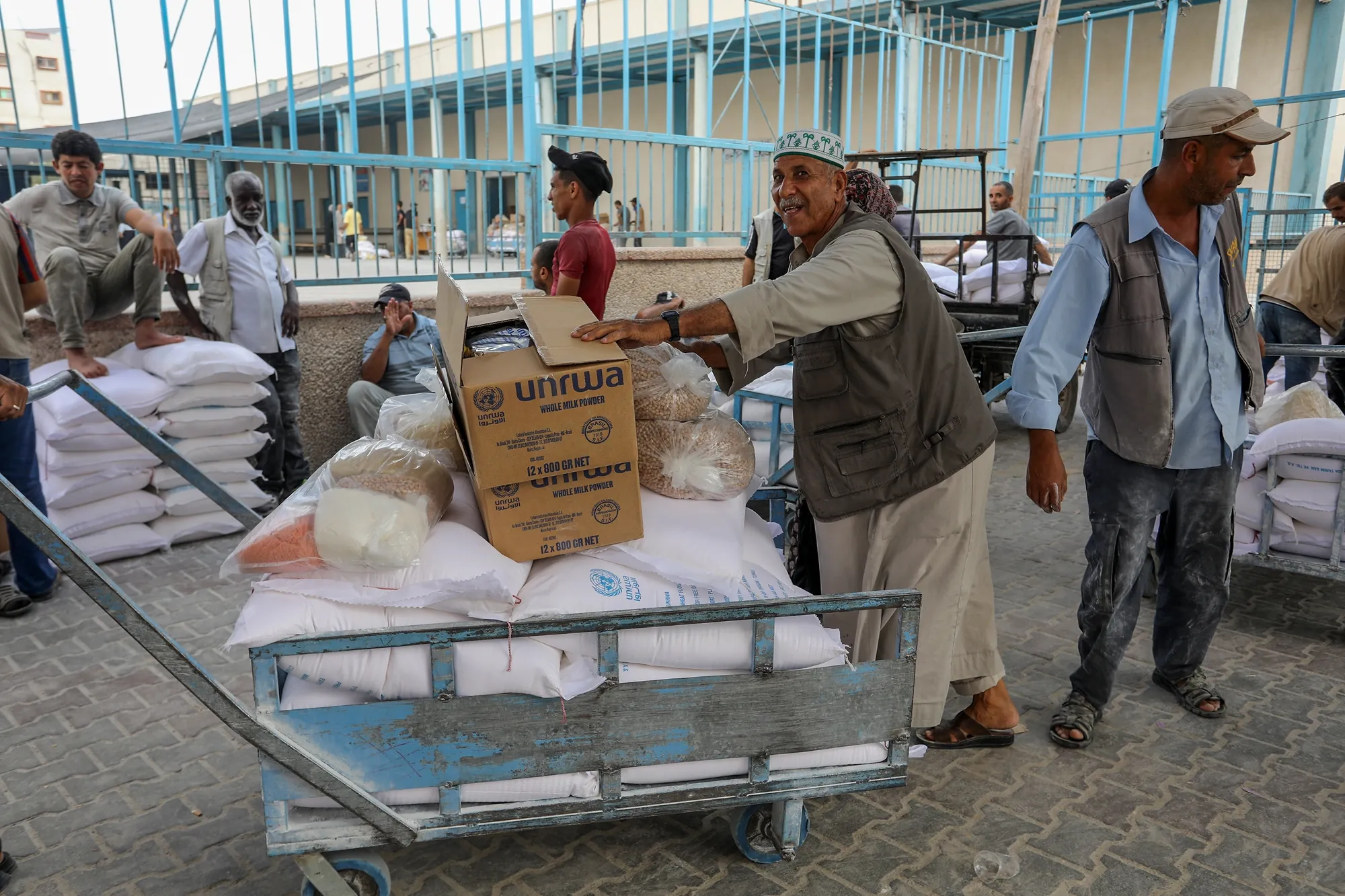
Reputational assessments should not rely solely on what an organization says about itself; independent external sources carry greater weight. In August 2024, the United Nations Relief and Works Agency for Palestine Refugees in the Near East (UNRWA) announced a USD 3 million agreement with Qatar Charity to provide life-saving assistance in Gaza, including food, emergency shelter, and health care. UNRWA’s Chief of Staff described Qatar Charity as a trusted partner of the United Nations family. The agency’s website also documents earlier cooperation in support of health care and food assistance.
These partnerships do not exempt any organization from scrutiny or accountability. They do, however, provide external evidence that should be considered as part of a comprehensive assessment rather than relying on allegations or defenses alone. Calling for humanitarian organizations not to be condemned without evidence does not shield them from legal or media scrutiny. Because trust affects their ability to operate, the need for transparency and compliance is all the greater.
Protecting Reputation Does Not Mean Avoiding Accountability
On its Facts & Clarifications page, Qatar Charity states that its country risk-assessment framework covers 60 countries and that beneficiaries, partners, donors, and stakeholders are screened against sanctions lists—including those of the UN Security Council, the European Union, the US Office of Foreign Assets Control, Qatar’s national list, and relevant lists in the countries of operation—using the World-Check system. It also states that independent financial audits are conducted annually. The proper equation, therefore, is not allegation versus defense, but allegation, verification, evidence, accountability, and, ultimately, a judgment grounded in fact.
Whom Are We Protecting When We Protect Humanitarian Space?
Ultimately, the issue is not about protecting an organization’s name or media image, nor is it about granting humanitarian organizations legal or media immunity. The issue is ensuring that criticism is evidence-based and that unproven suspicion, disinformation, or the conflation of humanitarian engagement with political alignment does not become an operational penalty imposed before verification.
Humanitarian space depends heavily on trust: the trust of donors, partners, banks, authorities, and local communities. OCHA explains that adherence to humanitarian principles helps build trust and acceptance that enable aid workers to negotiate access to people in need. Conversely, perceptions of association with a political or military objective may put aid workers at risk and increase restrictions. When trust erodes, the consequences emerge far from courtrooms and news screens: a delayed transfer, a hesitant supplier, a stalled partnership, or a narrowing corridor of access. The question is then no longer simply whose reputation was damaged, but the more human question: who was waiting for assistance at the other end of the road?
When Trust Erodes: Reputation, Funding and Humanitarian Access
How does the reputation of humanitarian organizations affect aid delivery?
An organization’s ability to operate rests on trust and acceptance. When its reputation is shaken, its transfers may be delayed, its partnerships stalled and its access narrowed, so aid reaches people in need later.
How many countries face high constraints on humanitarian access?
ACAPS’s July 2026 overview found that 44 of the 66 countries assessed faced high to extreme access constraints, with access deteriorating in 26 countries and improving in only one.
What is de-risking in humanitarian transfers?
It is when banks hesitate or refuse to process transfers to areas under sanctions or counterterrorism measures, so humanitarian transfers are delayed or rejected.
Does protecting reputation mean exempting organizations from accountability?
No. What is needed is evidence-based criticism: allegation, verification, accountability and a judgment grounded in fact, with transparency and compliance from the organization itself.