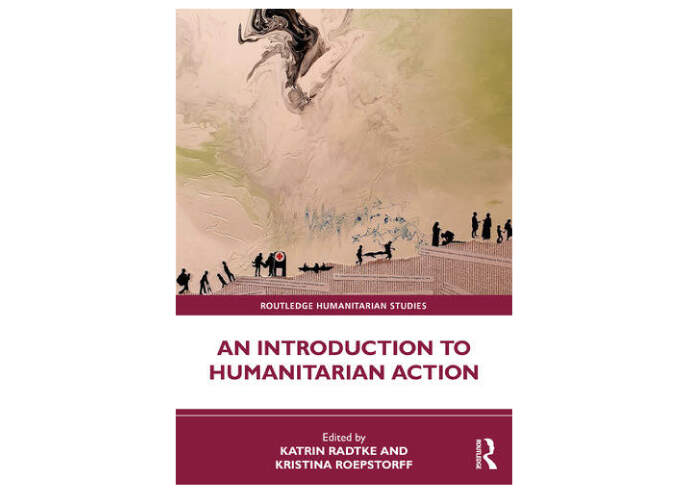
How does the humanitarian sector work, and what must change as crises become more complex? An Introduction to Humanitarian Action addresses these questions through a practice-oriented account of the system, its principles, and the debates shaping its reform. Written for students and practitioners, the textbook aims to develop critical thinking alongside practical skills.
From Foundations to Response
The volume’s 12 chapters are organized into three parts. The first, “Introduction,” examines humanitarian action in a changing world and the need to decolonize the sector.
The second, “Humanitarian response,” turns to the workings of assistance: the types of crises organizations confront, the state and non-state actors involved, and the institutions through which they operate. It also covers rules and norms, response modalities and sectors, and humanitarian management.
Chapter contributors include Ghassan Elkahlout, Oheneba A Boateng, Rodrigo Mena, and Tonia Thomas, alongside the editors and other contributors.
Reform and Emerging Approaches
The final part, “Trends and challenges,” addresses humanitarian access and diversity and inclusion. A chapter on nexus thinking explores links between humanitarian action, development, and peace, while separate contributions examine innovation and anticipatory action. Localization and inclusive programming also feature among the book’s contemporary debates.
Local and Global Perspectives
Four “Zoom in” sections by Janaka Jayawickrama accompany selected chapters. Their subjects are interactions between local and international responses, communities as first responders, humanitarianism across the globe, and different models of humanitarian action.
About the Editors
Katrin Radtke researches disaster risk assessment and localization. She previously worked with Welthungerhilfe and is listed by the publisher as Academic Director of the academy for humanitarian action.
Kristina Roepstorff researches humanitarian action, peacebuilding, and forced migration. She has taught on the European NOHA Master Programme since 2008 and at Royal Roads University’s School of Humanitarian Studies since 2015. Both hold doctorates in political science, from Humboldt University Berlin and Bremen University, respectively.