Overall, the Humanitarian Futures book argues that humanitarian action must plan from the future, not react to the past.
Moreover, humanitarian crises today are increasingly complex, driven by climate change, governance shifts, and technological disruption. In Humanitarian Futures: Challenges and Opportunities, Randolph C. Kent delivers both a wake-up call and a practical guide for navigating this new reality.
Book Review: Navigating the Uncharted Terrains of Tomorrow’s Crises
| Detail | Information |
|---|---|
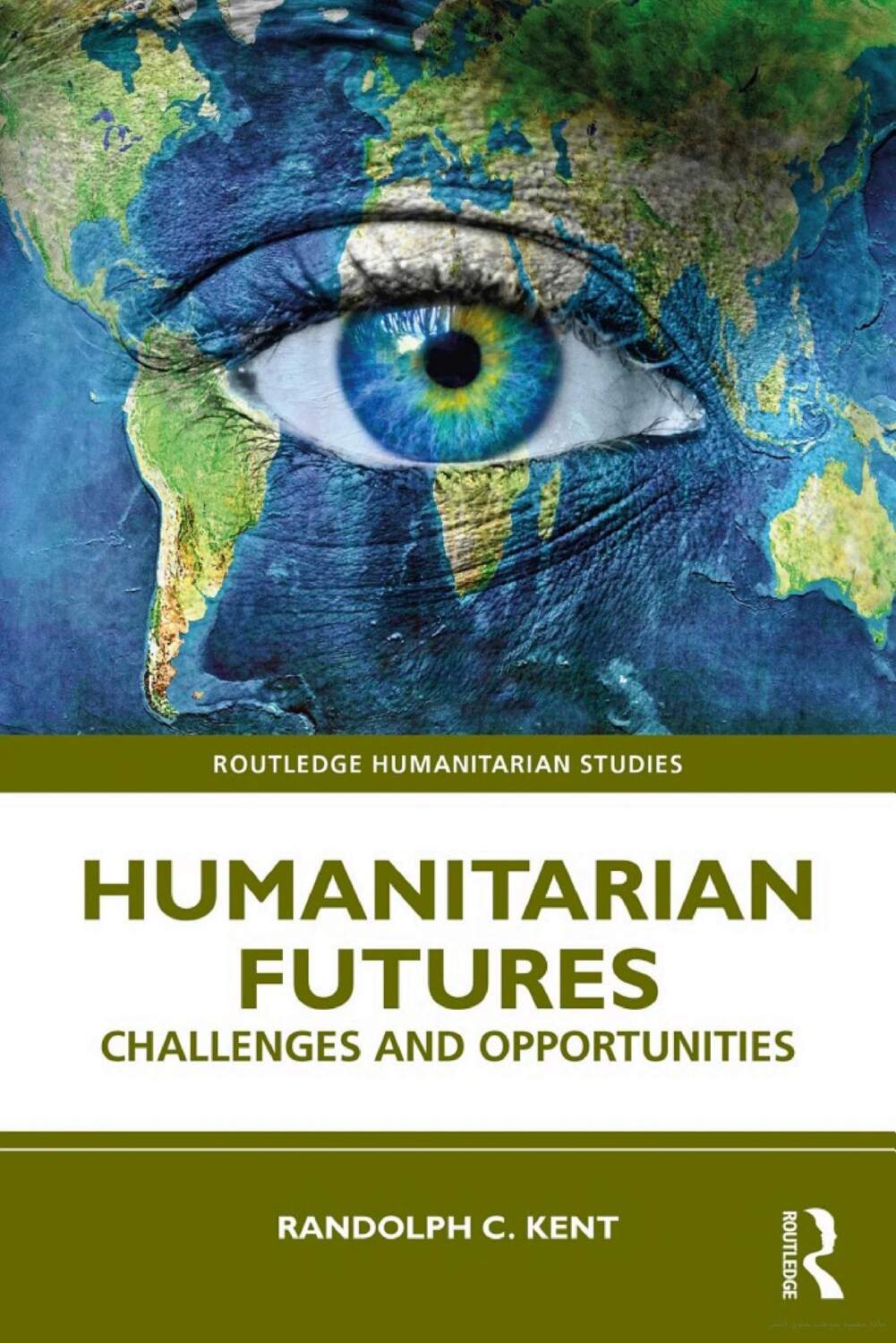
| Title | Humanitarian Futures: Challenges and Opportunities |
| Author | Randolph C. Kent |
| Publisher | Routledge (London) |
| Publication Date | First published in 2024 (Copyright © 2025) |
| Pages | 252 |
| ISBN (Paperback) | 9781032747996 |
Humanitarian Futures Book in Short
- Firstly, Kent argues that humanitarian action must move beyond reactive models and adopt a future-back approach.
- The book is structured as a roadmap for strategic transformation, spanning eight chapters.
- It introduces entanglement, where interconnected risks amplify each other, and polylaterality, which calls for multi-actor governance.
- Also, the final chapters translate foresight into actionable steps, making anticipation a routine discipline.
- Critics including Mami Mizutori, David Nabarro, and Ben Ramalingam praise its practical insights.
Kent, the UN’s first Humanitarian Coordinator with extensive experience in crises such as Rwanda, Ethiopia, Kosovo, Sudan, and Somalia, argues that humanitarian action must move beyond reactive models and adopt a future-back approach. This means planning from the future, for the future. This paradigm rejects incremental fixes and reliance on precedent, focusing instead on anticipating “what might be,” examining the changing nature of humanness and governance. It also focuses on translating foresight into practical steps for managing increasingly interconnected humanitarian threats.
Humanitarian Futures Book Contents
Specifically, the book is structured as a roadmap for strategic transformation, spanning eight chapters:
Introduction: Cassandra’s Challenge and the Helenus Alternative;
Chapter 1: An Odyssey;
Chapter 2: The Changing Dimensions of Human Agency;
Chapter 3: Governance and Resource Prioritisation from a Futures Perspective;
Chapter 4: Towards the Brink;
Chapter 5: The Entanglement Nexus;
Chapter 6: Managing Humanitarian Threats in a Polylateral World;
Chapter 7: The Humanitarian Organisation for the Future;
Chapter 8: The Helenus Alternative – Planning from the Future.
Kent introduces concepts such as entanglement, where interconnected risks amplify each other, and polylaterality, which calls for multi-actor governance beyond traditional humanitarian systems. The final chapters translate foresight into actionable steps, making anticipation a routine discipline rather than an occasional exercise.
Critics’ Reviews
First, Mami Mizutori, Former Special Representative of the UN Secretary-General for Disaster Risk Reduction, calls the book “inspiration and practical guidelines” for anticipating and mitigating compounding risks.
Also, David Nabarro, Co-founder and Strategic Director of the 4SD Foundation in Geneva, describes it as a “landmark book” that lights the way for practitioners facing complex challenges.
Ben Ramalingam, Author of Aid on the Edge of Chaos and Director of Strategy and Innovation at the British Red Cross, praises its “deep intellectual rigour and practical insights.”
Finally, ’Funmi Olonisakin, Vice-President (International Engagement & Service) and Professor of Security, Leadership & Development at King’s College London, highlights its compelling vision for preparing beyond today’s organisational comfort zones, a must-read for those navigating uncharted humanitarian terrains.
About the Author
Randolph C. Kent is also Visiting Professor at the African Leadership Centre, King’s College London; Honorary Professor at the Institute for Risk and Disaster Reduction, University College London; Senior Associate Fellow at the Royal United Services Institute. He is also Director of the Humanitarian Futures Programme (humanitarianfutures.org).
Questions About the Humanitarian Futures Book
What is the Humanitarian Futures book about?
Kent argues that humanitarian action must move beyond reactive models and adopt a future-back approach, planning from the future, for the future. In particular, he rejects incremental fixes and reliance on precedent.
What concepts does the Humanitarian Futures book introduce?
In particular, Kent introduces entanglement, where interconnected risks amplify each other, and polylaterality, which calls for multi-actor governance beyond traditional humanitarian systems. Moreover, the final chapters translate foresight into actionable steps.
Who has praised the book?
Overall, Mami Mizutori, David Nabarro, Ben Ramalingam, and ’Funmi Olonisakin are among the critics who highlight its practical insights. Nabarro calls it a “landmark book.”