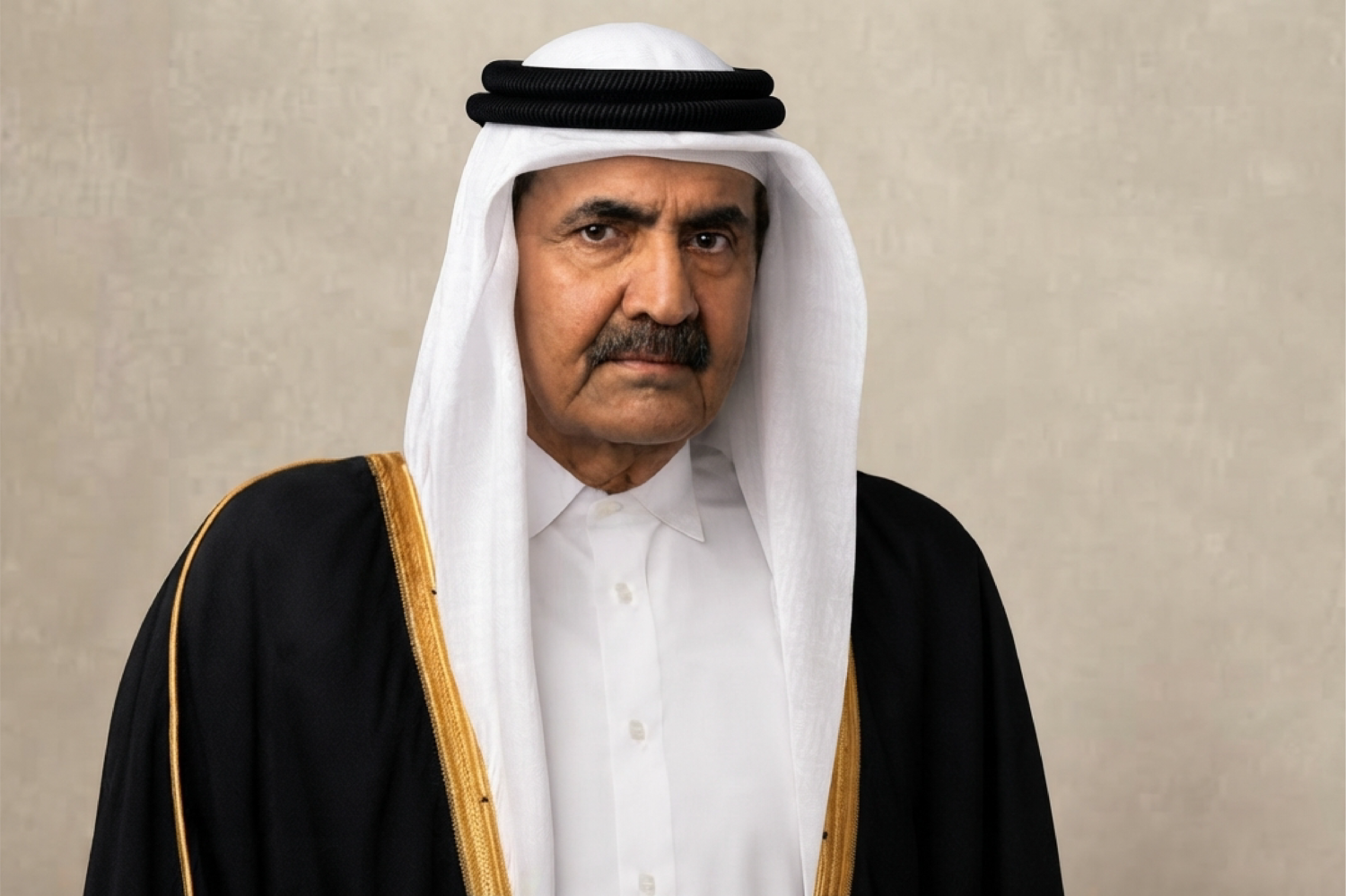
In modern history, humanitarian action has undergone profound transformations, evolving from short-term relief efforts into enduring institutions underpinned by legislation and long-term planning. In Qatar, this transformation was closely associated with the era of His Highness the Father Amir Sheikh Hamad bin Khalifa Al Thani, may God have mercy on him. During his reign, charitable giving developed from largely individual initiatives into an organized endeavours protected by legislation and sustained by institutions.
From the moment he assumed office in 1995, charitable giving in Qatar became integral to the nation-building project: legislation provided a regulatory framework, institutions carried the work forward, and the country’s humanitarian engagement extended to Lebanon, Darfur and Gaza. Under his leadership, giving became a national undertaking rather than a seasonal initiative—one that continues to guide Qatar’s charitable sector today.
Charitable Giving at the Heart of the Nation-Building Project
Qatar practiced social solidarity long before it was enshrined in law. It is a tradition passed down through generations, sustained in community gatherings and upheld by benefactors during Ramadan and in times of hardship. The era of the Father Amir, however, gave this tradition a new institutional dimension: giving would no longer depend solely on individual benevolence, but would become an organized endeavours with clear frameworks, dedicated institutions, and long-term continuity.
The direction was clear from the outset. In the same year that he assumed office, Qatar Foundation for Education, Science and Community Development was established by Her Highness Sheikha Moza bint Nasser, affirming that investment in people—through education and community development—would be central to the new era. Everything that followed was grounded in the same principle: people are the ultimate purpose, and institutions are the means of serving them.
1998 and 2004: Two Laws That Built Trust
Those working in the charitable sector understand that trust is the foundation of giving. Donors contribute with confidence when they know that their support will reach its intended beneficiaries, while institutions operate effectively when their mandates and responsibilities are clearly defined. Establishing a robust regulatory framework was therefore among the most significant contributions to charitable work during his reign, even if it was also among the least visible.
On May 5, 1998, Law No. 8 of 1998 concerning private associations and institutions was enacted, providing civil society organizations in Qatar with a clear legal framework governing their establishment, operations, and accountability. Six years later, on May 10, 2004, Law No. 13 of 2004 established the Qatar Authority for Charitable Activities as a specialized body responsible for regulating and overseeing charitable work.
In 2014, the Regulatory Authority for Charitable Activities was established pursuant to Amiri Decision No. 43. The Authority is the institutional successor to, and a further development of, the Qatar Authority for Charitable Activities established in 2004. Qatar’s charitable sector thereby progressed from basic oversight and regulation to a more advanced framework centred on governance, transparency, compliance, risk management, and strategic regulation in line with international best practices. This evolution has strengthened the effectiveness and sustainability of Qatar’s charitable and humanitarian sector and reinforced confidence in it at the national, regional, and international levels.
Legislation may appear removed from the human dimension of giving, yet it is precisely what protects charitable work and ensures its continuity. Together, these two laws established the foundation on which the sector was built, enabling charitable activities to be conducted with transparency and accountability. Within this framework, Qatari charitable institutions gained the stability needed to plan for the long term and move beyond emergency relief towards sustainable development.
Qatar’s Helping Hand Across the World
Charitable giving during his reign was not confined to Qatar’s borders. In 2002, the Qatar Fund for Development was established under Law No. 19 of 2002 to serve as the state’s official development assistance institution. Qatar’s international giving was thus no longer limited to responding to crises; it became a vehicle for long-term development partnerships that built schools, hospitals and roads, creating an impact that endured long after disasters had receded.
This commitment extended to places far beyond the region. In the aftermath of Hurricane Katrina in 2005, Qatar established the Qatar Katrina Fund within two weeks, allocating USD 100 million to education, housing, and health care projects. Three years later, the father Amir visited New Orleans to observe the impact of that support firsthand. Following the Great East Japan Earthquake and tsunami of March 11, 2011, he announced a further USD 100 million grant to support relief efforts and accelerate recovery. It was an approach to giving defined not by distance, but by human need.
During the reign of the Father Amir Sheikh Hamad bin Khalifa, the State of Qatar adopted a pioneering diplomatic approach that positioned reconciliation diplomacy and humanitarian mediation as key instruments for resolving regional and international conflicts. This diplomatic role was closely integrated with substantial humanitarian and development assistance, reflecting Qatar’s conviction that peace cannot be sustained without development and that addressing the root causes of crises is the most effective means of preventing renewed conflict and enabling recovery.
From Southern Lebanon to Darfur and Gaza: Giving That Crosses Borders
The Father Amir’s humanitarian engagement beyond Qatar was not a series of isolated responses, but a sustained presence in some of the most challenging contexts. It left a lasting impression on the communities concerned and made Qatar’s name synonymous with timely and principled assistance.
Lebanon: Towns Rising from the Rubble
Following the 2006 war in Lebanon, Qatar supported the reconstruction of towns in the south, including Bint Jbeil, Aita al-Shaab, Ainata and Khiam, investing more than USD 300 million in infrastructure. In July 2010, the father Amir visited these towns, becoming the first Arab leader to visit southern Lebanon, and was presented with their keys after they had risen from the rubble.
Darfur: Peace Made Visible in People’s Lives
In Sudan, Doha hosted the Darfur peace process, culminating in the signing of the Doha Document for Peace in Darfur on July 14, 2011, when the Father Amir delivered an address. Qatar’s support did not end with the agreement. At the International Donors’ Conference for Reconstruction and Development in Darfur, hosted in Doha on April 7–8, 2013, Qatar pledged USD 500 million, reflecting the conviction that peace is not complete until people experience its benefits in their homes, schools, and livelihoods.
Gaza: A Visit That Brought Hope
In October 2012, the father Amir became the first head of state to visit the Gaza Strip since 2007. During the visit, he increased Qatar’s reconstruction grant to Gaza to USD 400 million, funding housing, infrastructure and healthcare projects. The visit conveyed a simple yet profound message to the people of Gaza: they were not alone. Together, these three milestones reflected a single principle: meaningful assistance reaches those in greatest need, however difficult the circumstances.
Qatar Charity: From Foundation to Expansion
Qatar Charity was founded in 1992, several years before the beginning of his reign, but it grew and expanded within the legislative and institutional environment established under his leadership. Guided by his vision, the organization entered a significant phase of development while remaining faithful to an approach that placed people at the center of charitable action and made their well-being its primary measure. During his reign, numerous humanitarian interventions and development projects were implemented through Amiri grants or funding from the Qatar Fund for Development in countries affected by protracted crises and major disasters, including Gaza, Darfur in Sudan, and Syria, as well as countries affected by the Indian Ocean tsunami, such as Indonesia.
The World Bids Farewell
Qatar was not alone in its grief. Condolences arrived from capitals around the world, and United Nations Secretary-General António Guterres mourned his passing, describing him as an inspiring leader who had played an influential role in his country’s transformation. His words reflected what Qataris had long recognized: the Father Amir’s impact extended far beyond the nation’s borders.
A Path That Endures Beyond His Passing
Leaders pass on, but the paths they establish endure. The Father Amir set a clear course for Qatar’s charitable sector: legislation that safeguards public trust, institutions that fulfill their responsibilities, and assistance extended wherever hardship arises. Today, as Qataris bid him farewell with sorrow and faith in God’s decree, the most fitting tribute is to sustain this work in the same spirit and ensure that people remain its ultimate purpose and measure, as they did throughout his reign. May God grant him abundant mercy and reward him generously for all that he gave to Qatar and to humanity.