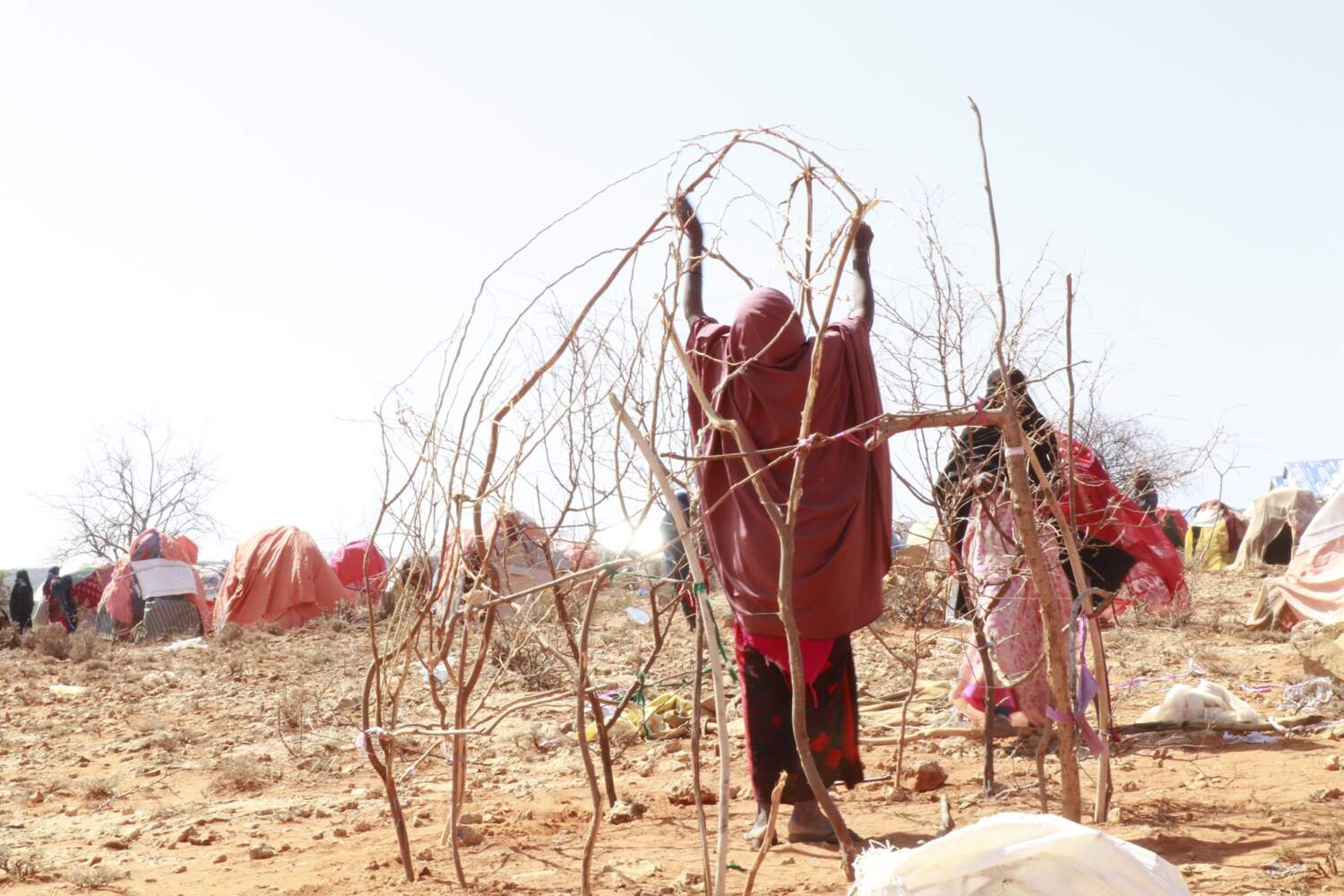
In short, the Somalia drought crisis, recorded here by Qatar Charity field staff, has left families walking hundreds of kilometers in search of water and safety.
Somalia Drought Crisis at a Glance
- Overall, the region has lived under drought for two consecutive years.
- Moreover, exhausted families trek distances sometimes exceeding 200 kilometers in search of water or safety.
- Some families who fled the Bay and Bakool regions had walked more than 450 kilometers.
- Meanwhile, most wells have dried up, and those that remain have dropped to alarming levels.
- Qatar Charity relief convoys are seen as a final lifeline by the families they reach.
For two consecutive years, we have lived under the grip of a land that has forgotten the touch of rain. Here, drought is not merely a headline, it is a harsh reality we witness every day, shaping every aspect of life for us and our communities.
Somalia Drought Crisis: What We Witnessed
On the ground, I witnessed how drought devastates everything in its path, sparing nothing. For instance, the carcasses of livestock line the roads, silent testimony to livelihoods that have vanished. Moreover, exhausted families trek grueling distances, sometimes exceeding 200 kilometers, in a desperate search for a drop of water or a place of safety to shield them from the harshness of thirst and hunger.
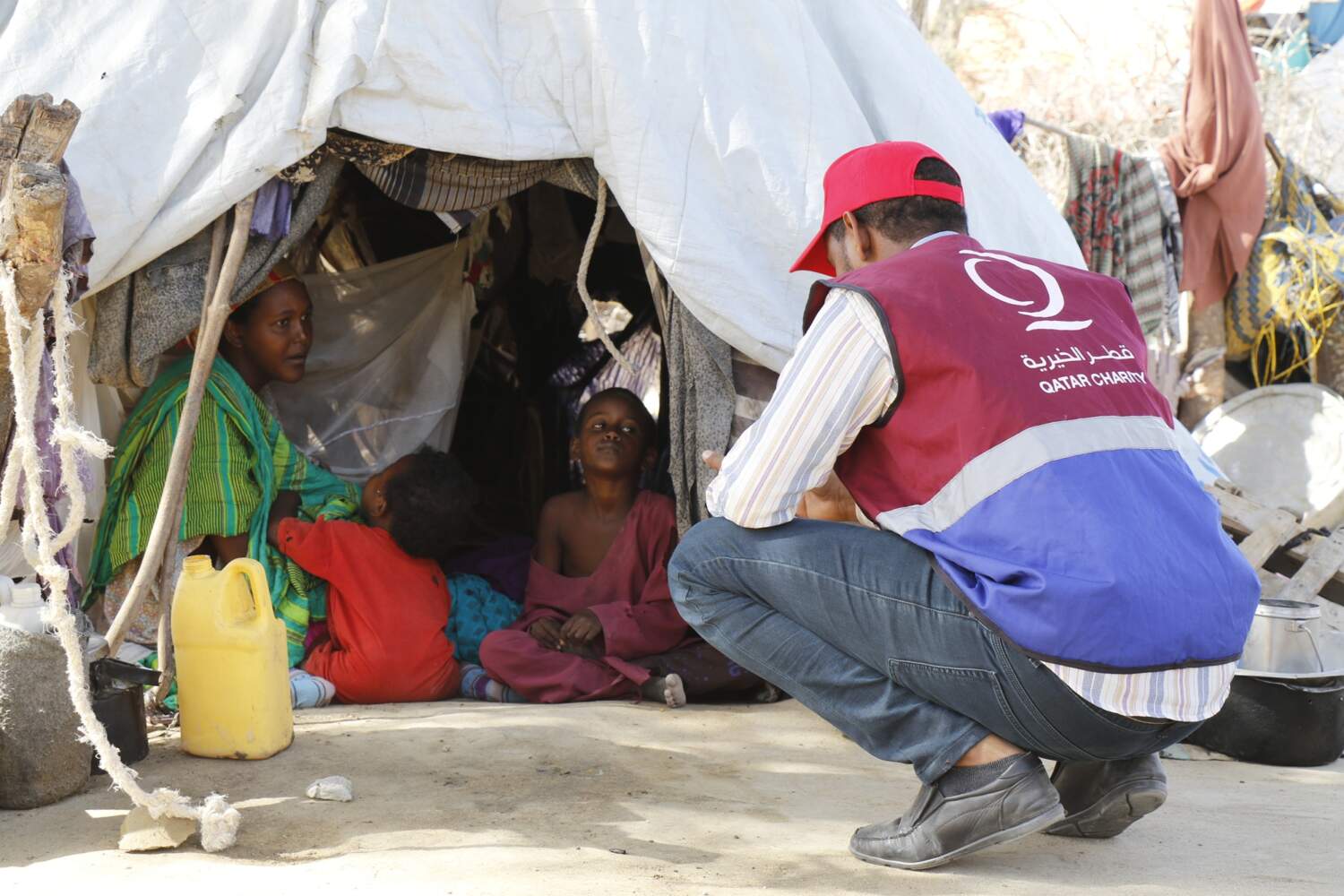
What weighs most heavily on the heart is the condition of children, women, and the elderly. Hunger has etched its harsh lines into their faces, and frailty has become the language of their bodies. For example, some told me they survive on just one meal a day; at times, days pass without sufficient food. However, even in this landscape of despair, the light in their eyes has not entirely faded, a faint hope remains, waiting to be rekindled.
A Faint Hope Arrives with Relief Convoys
That hope became visible with the arrival of Qatar Charity’s relief convoys. Faces softened, hands were raised in prayer, and it was clear that people saw this assistance not merely as food and water, but as a final lifeline. Thus, it helped them endure as they await Allah’s relief and the long-awaited return of rain. Overall, these moments, as painful as they are, are what compel us to continue, no matter how severe the conditions or how great the challenges are.
Somalia Drought Crisis in the Camps of Baidoa
Meanwhile, in my role as a Field Assistant in Baidoa, one of the main cities hosting large numbers of displaced people in the South West State of Somalia, I entered camps filled with stories of loss and displacement. Specifically, I met families who had fled from various areas across the Bay and Bakool regions after losing their livestock, their crops, and with them, their entire means of livelihood. In fact, some had walked more than 450 kilometers under a scorching sun, with nothing but exhaustion and hope to carry them forward.
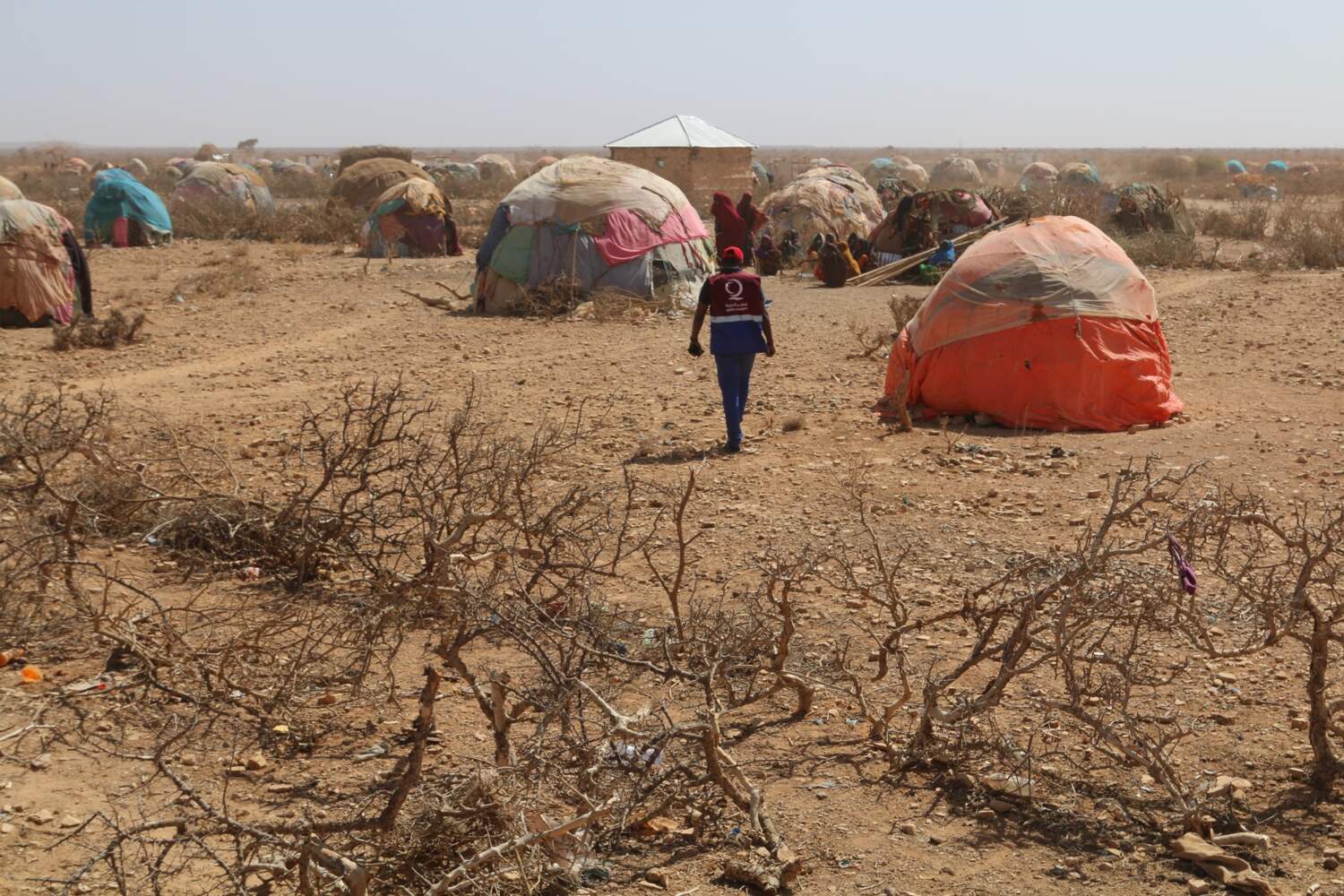
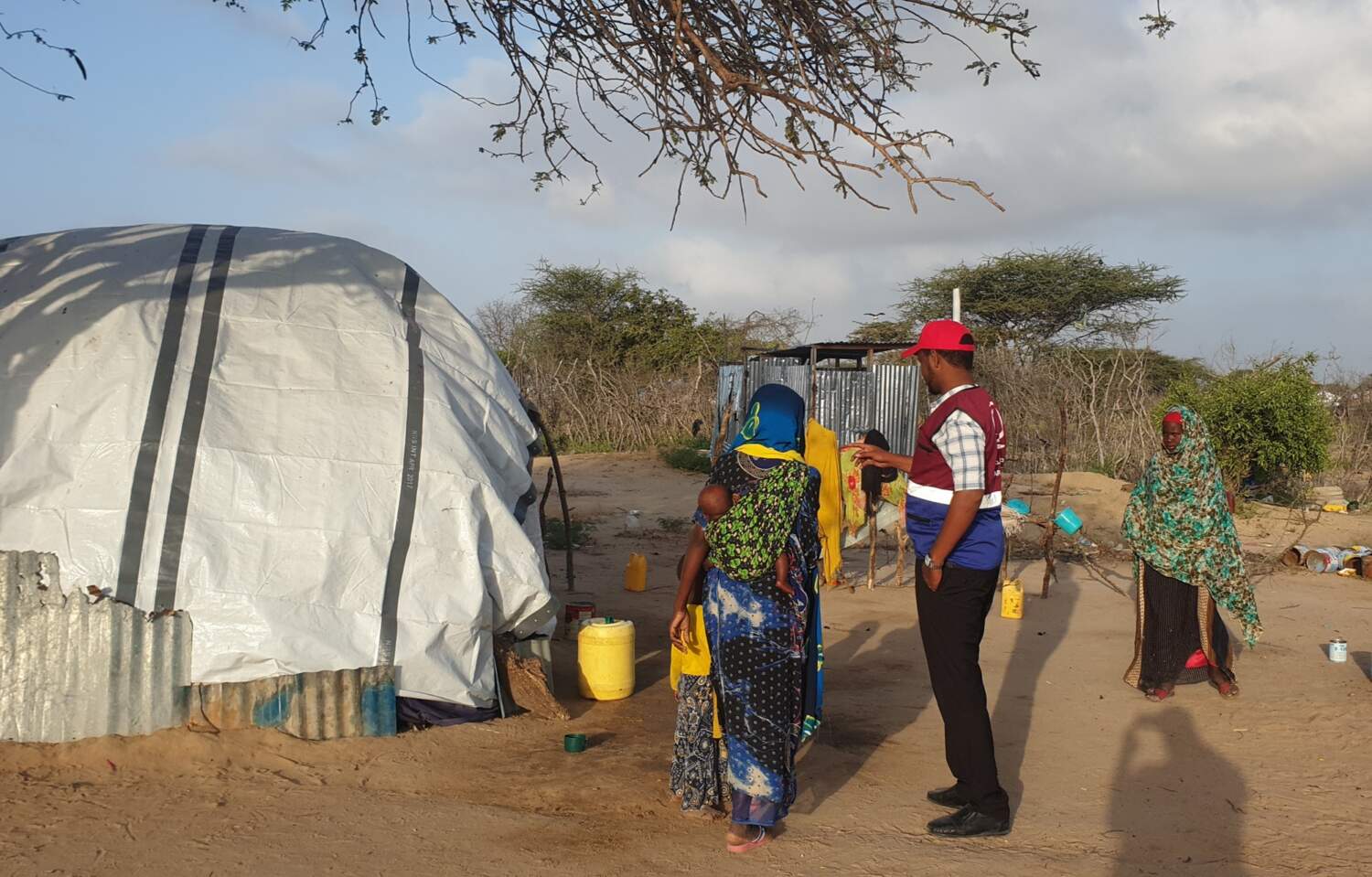
In short, the main facts recorded in the field are the following:
| Observation | Detail |
|---|---|
| Duration of the drought | Two consecutive years |
| Distance families trek for water or safety | Sometimes exceeding 200 kilometers |
| Longest walk reported | More than 450 kilometers |
| Food | Some families survive on just one meal a day |
| Location of the camps visited | Baidoa, South West State of Somalia |
Water Is Now a Struggle for Survival
Water here is no longer just a daily necessity; it is a relentless struggle for survival. Most wells have dried up, while those that remain have dropped to alarming levels, making access to safe drinking water extremely difficult. As a result, this reality has deepened suffering and reinforced a sense of helplessness, particularly in the absence of viable alternatives and amid the severity of the crisis.
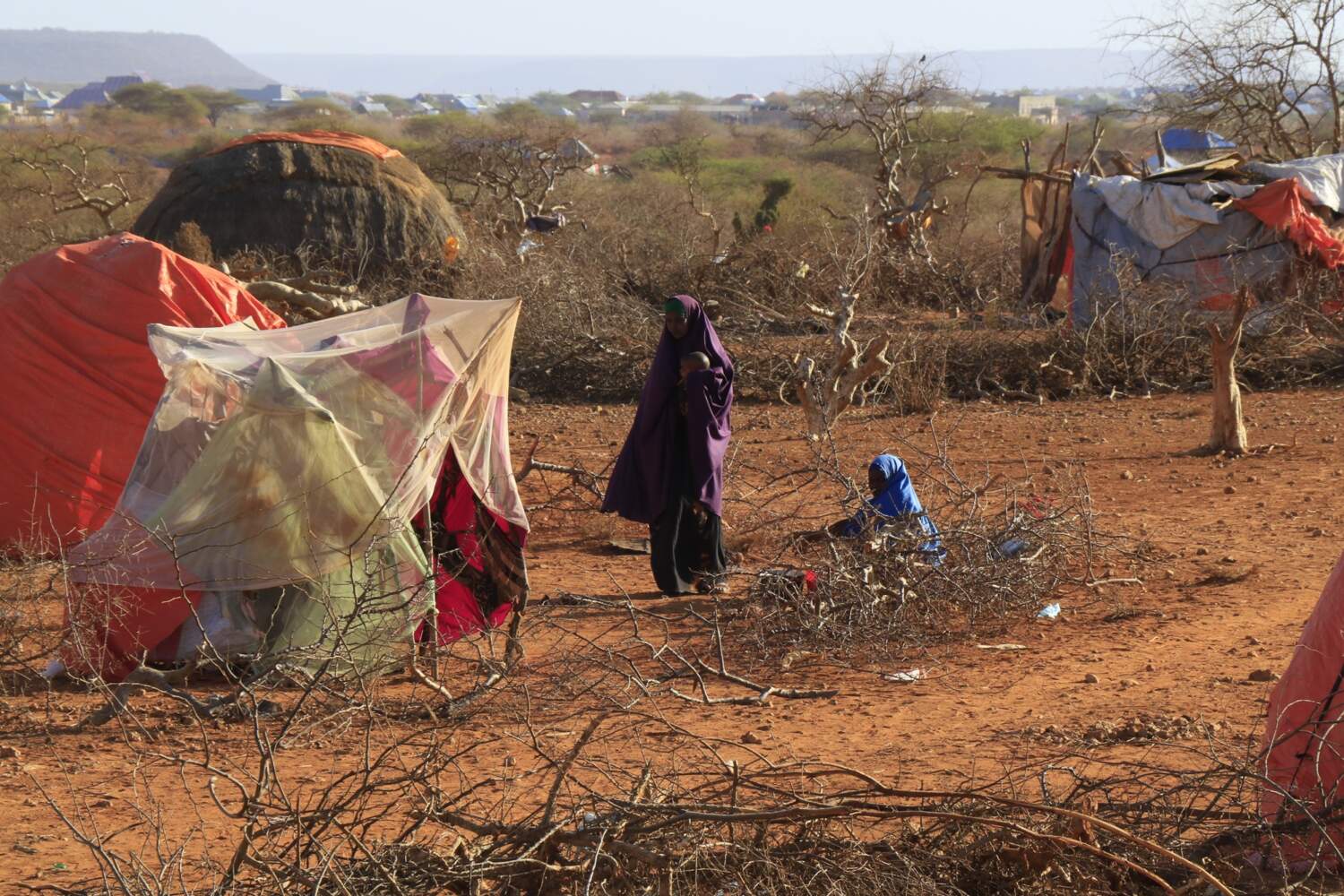
These scenes never leave the memory. They are not mere statistics in reports. Instead, they are lives waiting for a helping hand. They remind us, as humanitarian field workers, that our work is not a choice, but a profound moral responsibility. Behind every tent is a human story, and behind every silent gaze lies an unspoken prayer, felt deeply in the heart long before it is heard.
Field Observations Recorded by:
Ismail Hassan Handulle, Relief Projects Coordinator
Ahmed Abdullah Ahmed, Field Assistant
Qatar Charity, Somalia Branch
Questions About the Somalia Drought Crisis
What is the Somalia drought crisis?
It is a drought that has lasted two consecutive years, leaving most wells dry and making access to safe drinking water extremely difficult. Moreover, families have lost their livestock, their crops and their livelihoods.
How far have families walked in the Somalia drought crisis?
Specifically, exhausted families trek distances sometimes exceeding 200 kilometers in search of water or safety. Some families who fled the Bay and Bakool regions had walked more than 450 kilometers.
What did the relief convoys mean for families?
People saw the assistance of Qatar Charity not merely as food and water, but as a final lifeline. Field workers continue their work, no matter how severe the conditions.