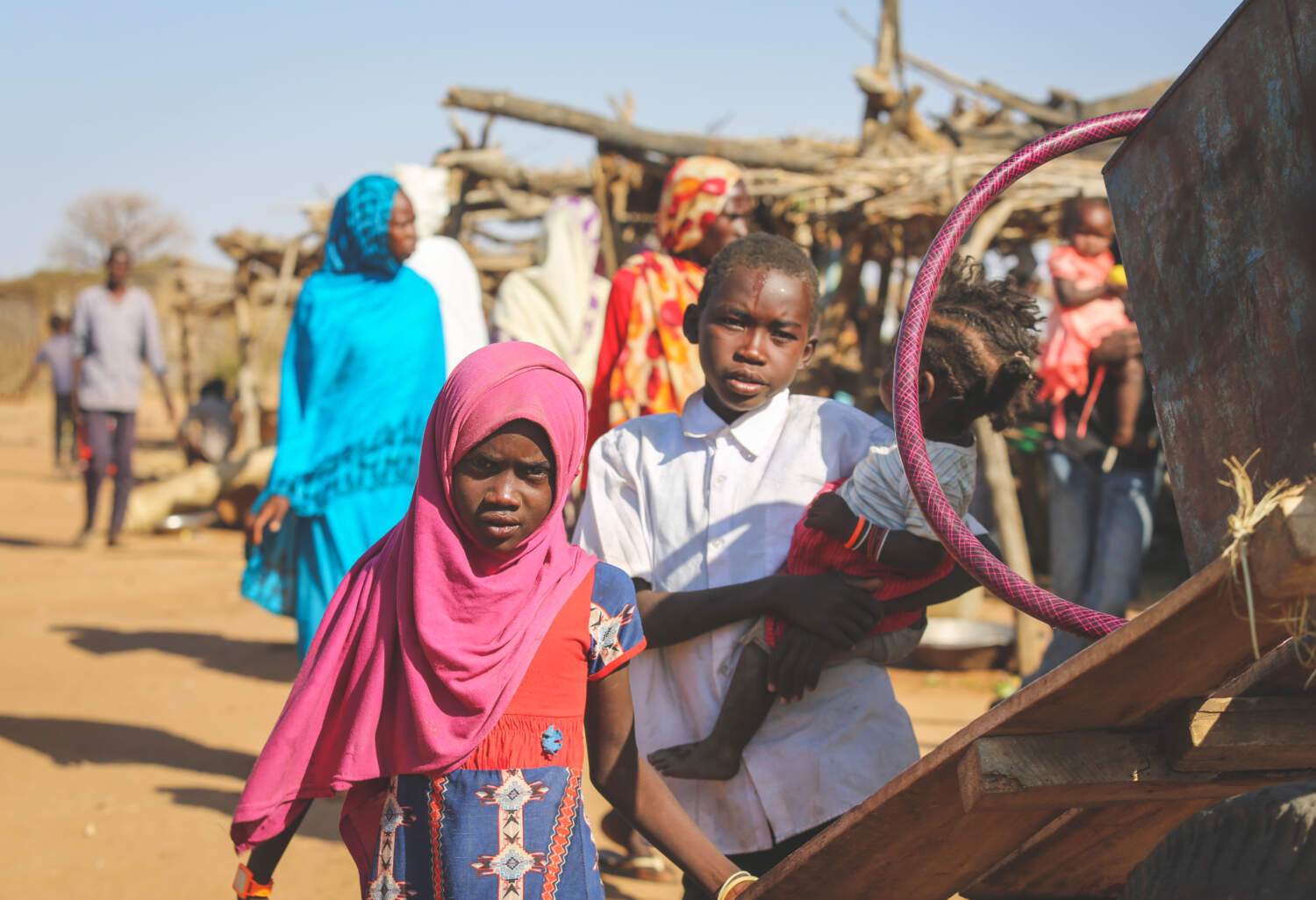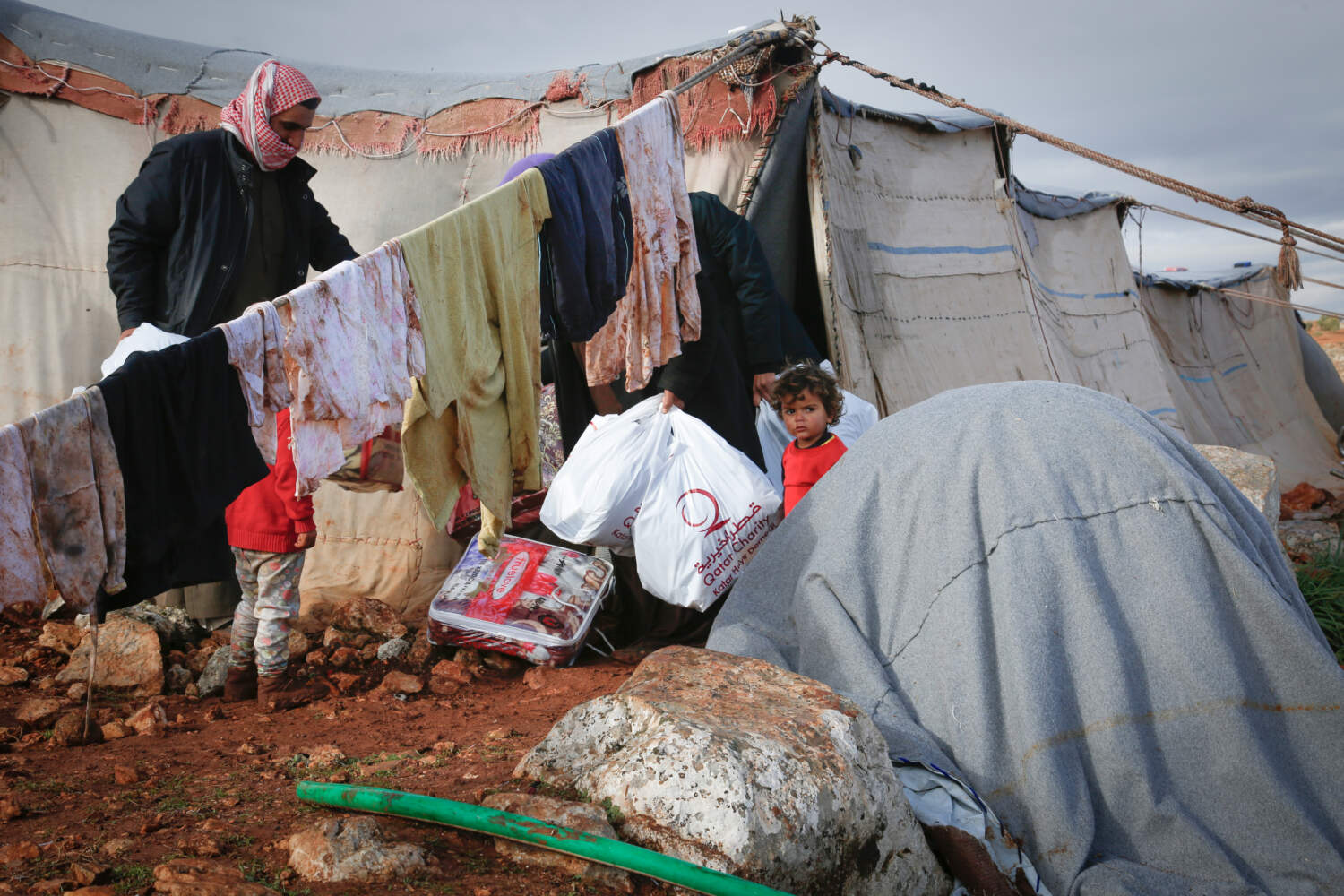
Across Palestine, Syria, Sudan, Somalia, Afghanistan and the Rohingya community, refugee camps and experiences of displacement have evolved from landscapes of loss and uprooting into wellsprings of memory and storytelling. From them has emerged what is often called refugee and camp literature, one of the most visible and influential literary currents of our time.
News bulletins often reduce refugee camps to numbers, statistics and images of tents stretching along the edges of cities and borders. Literature sees them differently: as worlds alive with memories, questions and human stories that rarely surface in reports.
As crises of refuge and displacement have multiplied in recent decades, refugee literature has grown into a broad narrative field documenting uprooting, exile and the search for belonging. Camps have shifted from supposedly temporary shelters into sites where memory and narrative are made. From Palestine, Syria and Sudan to Somalia, Afghanistan and the Rohingya camps, a rich body of writing has taken shape around loss, dispossession, exile and survival.
This writing is not a distinct genre in the strict critical sense. Rather, it is a narrative field that brings together fiction, poetry, diaries, testimony and autobiography around a shared experience: losing one’s place and seeking a new meaning of belonging.
Despite the profound historical and political differences between Palestine, Syria, Sudan, Somalia, Afghanistan and the Rohingya experience, the literature born of these contexts returns to one essential question: How does a person preserve memory and identity after losing the place to which they belong?
Palestine: The Camp as the Memory of a Nation
The Palestinian experience is the Arab world’s most prominent example of refugee literature. Since the Nakba of 1948, the camp has ceased to be merely a temporary place to live; it has become part of Palestinian consciousness, memory and identity.
In the works of Ghassan Kanafani, particularly Men in the Sun, Returning to Haifa and Umm Saad, displacement becomes more than a political event. It unfolds as a profound human experience shaped by dignity, loss and the search for a future. Kanafani helped establish the camp as one of the defining narrative spaces of modern Arabic literature.
Recent critical scholarship likewise identifies exile and dispossession as foundational elements of modern Palestinian literature, with the figure of the refugee remaining at the heart of contemporary Palestinian storytelling.
The anthology 11 Lives: Stories from Palestinian Exile underscores another vital shift: the refugee moves from being the subject of the story to becoming its author, as Palestinians narrate their experiences in their own voices.
Syria: Literature Born at the Border
If Palestine produced a narrative spanning decades, the war in Syria generated, in a far shorter period, an extensive body of novels and testimonies shaped by uprooting and exile.
Questions of war, identity, loss and passage run through the works of Khaled Khalifa, Samar Yazbek and Shahla al-Ujayli. Yazbek’s The Crossing stands among the most powerful accounts of movement between exile and Syria during the war. More than a record of events, it offers a human testimony to people struggling to survive amid devastation and reveals how the border became central to the contemporary Syrian experience.
Mohammad Fathi Al-Miqdad’s novel The Road to Zaatari, meanwhile, presents the camp as a fictional world. Zaatari is not simply a place of shelter, but an entire realm of waiting, memory, longing and existential uncertainty. Critical readings describe it as a space suspended between a lost homeland and an unknown future, between the desire to return and the demands of adapting to a new reality.
In this literature, borders are no longer mere political lines. They become part of the inner life of a person caught between two worlds, fully at home in neither.
In this literature, borders are no longer mere political lines. They become part of the inner life of a person caught between two worlds, fully at home in neither.
Sudan: Displacement from Reality into Narrative
Although literature responding to Sudan’s current displacement crisis is still taking shape, Sudanese fiction has long explored war, marginalization and uprooting.
One of its most notable examples is Abdelaziz Baraka Sakin’s novel The Messiah of Darfur, a major fictional treatment of the war in Darfur and the deep human and social fractures it produced. Across his work, marginalized people, displaced communities and survivors of violence occupy the center of the narrative rather than its edges.
These works carry renewed significance today as displacement spreads within Sudan and beyond its borders. They offer a literary and cultural frame through which to understand the human roots of the present crisis, beyond political or military reading alone.
Sudanese writing on war and displacement is no longer confined to Darfur. It is likely to expand as successive waves of displacement continue to reshape the country.
The coming years may bring new novels and memoirs that bear witness to what Sudan is living through today, preserving it within the nation’s collective memory, as literature has done in other human catastrophes.
Somalia: A Homeland Carried in Memory
The Somali experience offers a different model. Here literature does not stop at the camp; it opens onto questions of diaspora, exile and identities that cross borders.
Nuruddin Farah is among Africa’s most prominent literary voices to explore these concerns. In his novels, exile is an enduring condition: a simultaneous search for self and homeland. Studies of his work consistently identify exile as central to his vision of literature and Somali identity.
In Maps, questions of personal identity intersect with borders and political conflict, making the search for the self inseparable from the search for a country.
Somali British poet Warsan Shire’s celebrated poem Home has become one of the most widely shared literary texts on contemporary displacement. In spare, searing language, it captures a simple truth: people do not leave a safe homeland by choice; they flee when staying becomes more dangerous than departure.
The Rohingya: Poetry against Oblivion
The Rohingya crisis is among the clearest examples of displacement, becoming a struggle to defend identity and memory. Here, expulsion has meant more than the loss of place; it has been accompanied by attempts to erase the historical and cultural presence of an entire people.
Writing therefore assumes a purpose beyond literary expression: it becomes a means of safeguarding collective memory.
The anthology I Am a Rohingya: Poetry from the Camps and Beyond is the first major English-language poetry project to bring together Rohingya voices from within and beyond the camps. Its contributors include students, teachers, journalists and activists who have lived displacement firsthand.
Their poems return to recurring themes: longing for home, fear of being forgotten, defense of identity and the pursuit of justice. Through poetry, the camp is transformed from a place of shelter into a space where memory is preserved and exclusion resisted.
With relatively little fiction yet emerging from within the Rohingya community, poetry and personal testimony have become crucial forms for preserving collective memory and carrying it to the wider world.
The refugee is no longer portrayed solely as a victim, but as a person striving to rebuild a life, protect memory and shape a future.
In this respect, the Rohingya experience approaches the Palestinian one: both draw on story and poetry to sustain the symbolic and human presence of a people threatened with erasure from official narratives.
Afghanistan: Exile across Generations
The Afghan experience differs from many other histories of displacement because exile has extended across successive generations.
Khaled Hosseini has brought this experience to readers worldwide through works such as The Kite Runner and A Thousand Splendid Suns. In these novels, displacement is not a passing event but a force that reshapes families, social relationships and personal memory over decades.
In Sea Prayer, he renders the universal tragedy of forced migration through a father’s moving letter to his son before a perilous sea crossing, inspired by the death of the Syrian child Alan Kurdi.
Hosseini’s work is distinguished by its ability to weave history and politics into individual destinies, making it profoundly influential in shaping global awareness of refugee suffering.
From the Literature of Victimhood to the Literature of Survival
What unites these varied examples is a decisive shift: the refugee is no longer portrayed solely as a victim, but as a person striving to rebuild a life, protect memory and shape a future.
Palestinian, Syrian, Somali, Afghan and Rohingya writing does not dwell on loss alone. It also explores the capacity to endure and to recreate meaning. It acknowledges pain without allowing pain to become the whole story.
The true protagonist in these works is not displacement itself, but the human capacity to carry on despite it.
Many of these works can therefore be read as a literature of survival: writing that seeks the human being, not the tragedy alone.
When Stories Tell What Statistics Cannot
From Palestine, Syria and Sudan to Somalia, Afghanistan and the Rohingya community, refugee literature affirms that people can protect their stories even after losing their homes.
Behind every tent lies a memory; behind every journey into exile, an entire life; behind every number, a name and a story. The value of this literature lies in restoring the human being to the center of the frame. It transforms what reports present as a humanitarian crisis into a profound human experience, carried through fiction, poetry and testimony.
Refugee and camp literature may not constitute an independent literary genre in the strict academic sense. Yet it has become one of the most resonant and influential narrative fields of our time, because it preserves memory when place is lost and gives voice to what numbers and statistics cannot say.